
Asta 77 - Arti Decorative del '900
-
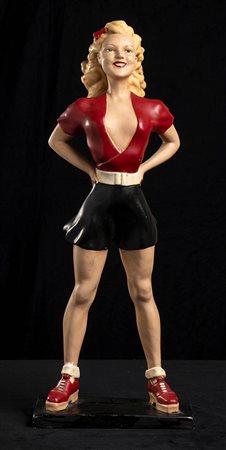
Lot 25 AMERICAN PIN UP
Plaster advertising silhouette.
45x16 cm
Bibliography: Cagianelli-Matteoni, Il Telegrafo e il Tirreno, 50 anni di pubblicità 1900-1950, Manidistrega ed. 2011 -
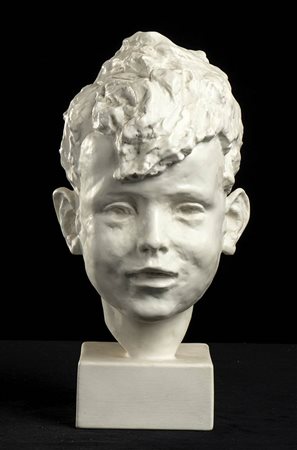
Lot 26 ROSENTHAL
BOY’S HEAD
Biscuit boy’s head.
29 cm high -
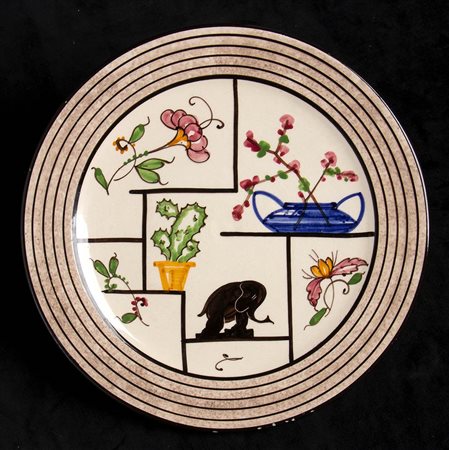
Lot 27 BARRAU & MESSERI-BMC SESTO FIORENTINO
FUTURIST PLATE
Futurist ceramic painted plate.
24 cm diameter -
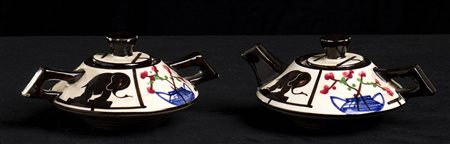
Lot 28 BARRAU & MESSERI-BMC SESTO FIORENTINO
MILK JUG AND SUGAR BOWL
Futurist ceramic painted milk jug and sugar bowl.
8x16 cm -
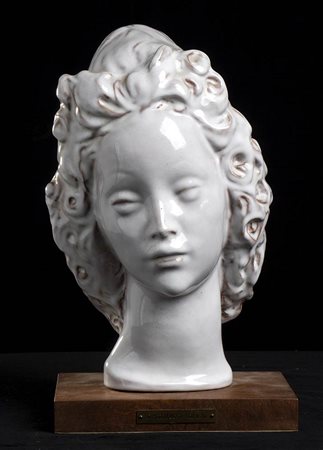
Lot 29 DOMENICO MATTEUCCI (1914-1991)
FEMALE HEAD
White Earthenware female head.
30 cm high -
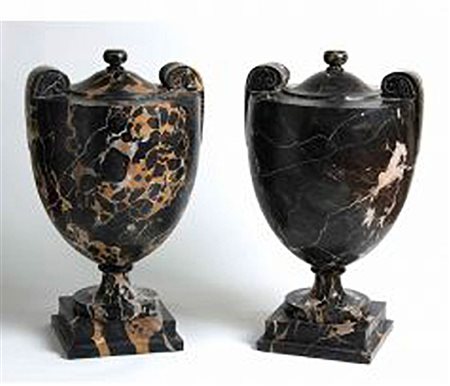
Lot 30 SCULPTOR OF XX CENTURY
Couple of vases, 30s/40s
Portoro marble, h. 51 cm
Portoro or Portovenere marble is a fine variety of black marble from the Gulf of La Spezia area. Its very decorative aspect makes it suitable for artistic and valuable creations such as vases, columns, interiors of churches and palaces, coverings, floors and furniture floors. The color is intense and bright black with golden veins.
Geologically it is a limestone with carbonate veins formed in a calm, deep, little oxygenated and rich in organic substance marine environment. The black color is due precisely to the richness of organic substance while the golden streaks to the partial dolomitization of the organic substance which has oxidized.
The name Portoro derives from the Italian translation of the French term porte d'or ("golden door") with which it was called during the French domination. Originally it was called "yellow and black mixture", later it was called "Giada di Portovenere". In English this variety of marble is known as “black and gold”.
Portoro is found only in the province of La Spezia, in particular in the municipalities of Porto Venere, La Spezia and Riccò del Golfo which constitute delicate areas from a landscape and naturalistic point of view.
It is not known exactly when the beginning of the rational exploitation of Portoro marble deposits dates back, but it is already presumed to be in Roman times. In the ancient city of Luni, located between the provinces of La Spezia and Massa Carrara, shaped slabs of this marble were used while from the Etruscans came to us architectural works containing slabs and other small parts made of Portoro marble.
In Roman times, Portoro marble was widely used in the imperial villas and was probably also used in the construction of the temple dedicated to Venus which stood at the end of the promontory of Porto Venere and above which the church of San Pietro was built later.
At the beginning of the 19th century, the use of this marble also spread outside Liguria, particularly in France, Belgium and Switzerland to embellish palaces and castles such as those of Versailles, Marly and Compiegne. Later it was also exported to the United States where, for example, the Paramount projection room was lined. -
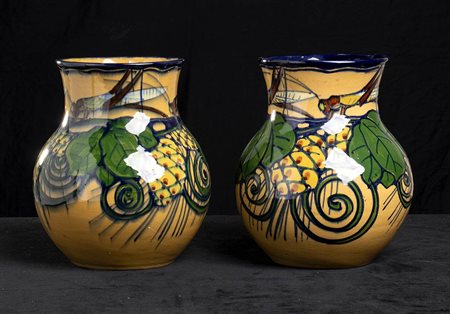
Lot 31 ROMAN SECESSION
Pair of ceramic vases painted under glazed.
21x17 cm -
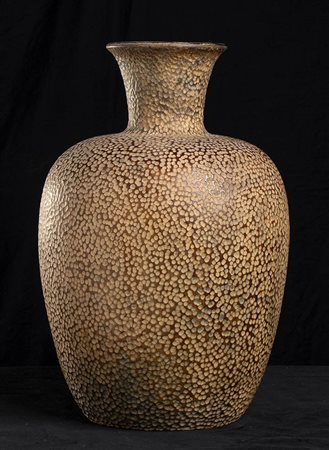
Lot 32 MANIFATTURA ZACCAGNINI
PAINTED CERAMIC VASE
Painted ceramic vase
38 cm high -
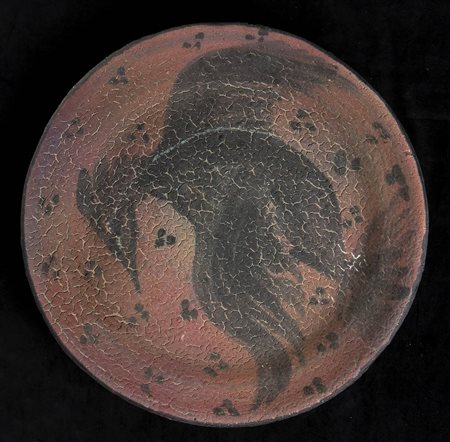
Lot 33 CERAMIC PLATE - VIETRI
Vietri Ceramic plate signed “La Vetriese”.
40 cm diameter -
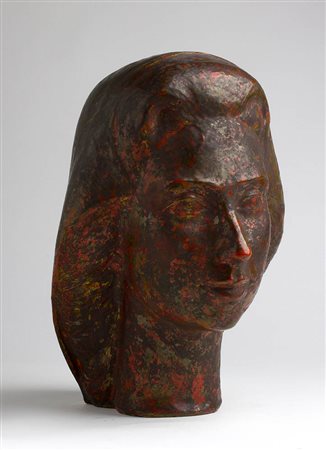
Lot 34 GIUSEPPE FORTUNATO PIRRONE
Borgetto (Palermo) 1898 - Rome 1978
FEMALE PORTRAIT
Painted ceramic. Inner label: III Rassegna di Arti figurative di Roma e del Lazio
34 cm high -
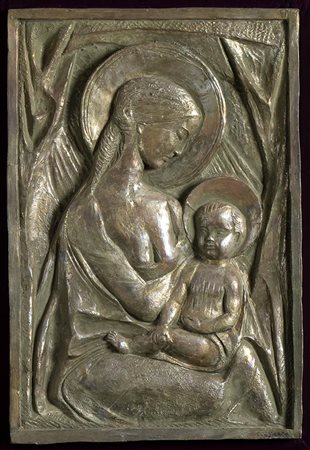
Lot 35 ENZO ASSENZA(1915-1981)
MADONNA AND CHILD
Glazed Ceramic Low relief on a wooden panel.
60x40 cm -
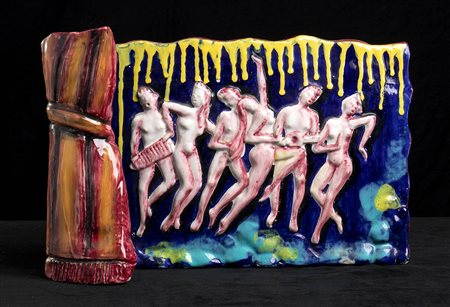
Lot 36 MANIFATTURA LIVIA DERUTA
CERAMIC PLAQUE
Painted ceramic plaque
22x35 cm