 Lucas - Via Nino Bixio 32, 20129 Milano
Pre-Asta PALAZZO DUODO – DIPINTI ANTICHI E DEL XIX SECOLO PALAZZO DUODO – DIPINTI ANTICHI E DEL XIX SECOLO
giovedì 3 dicembre 2026 ore 14:30 (UTC +01:00)
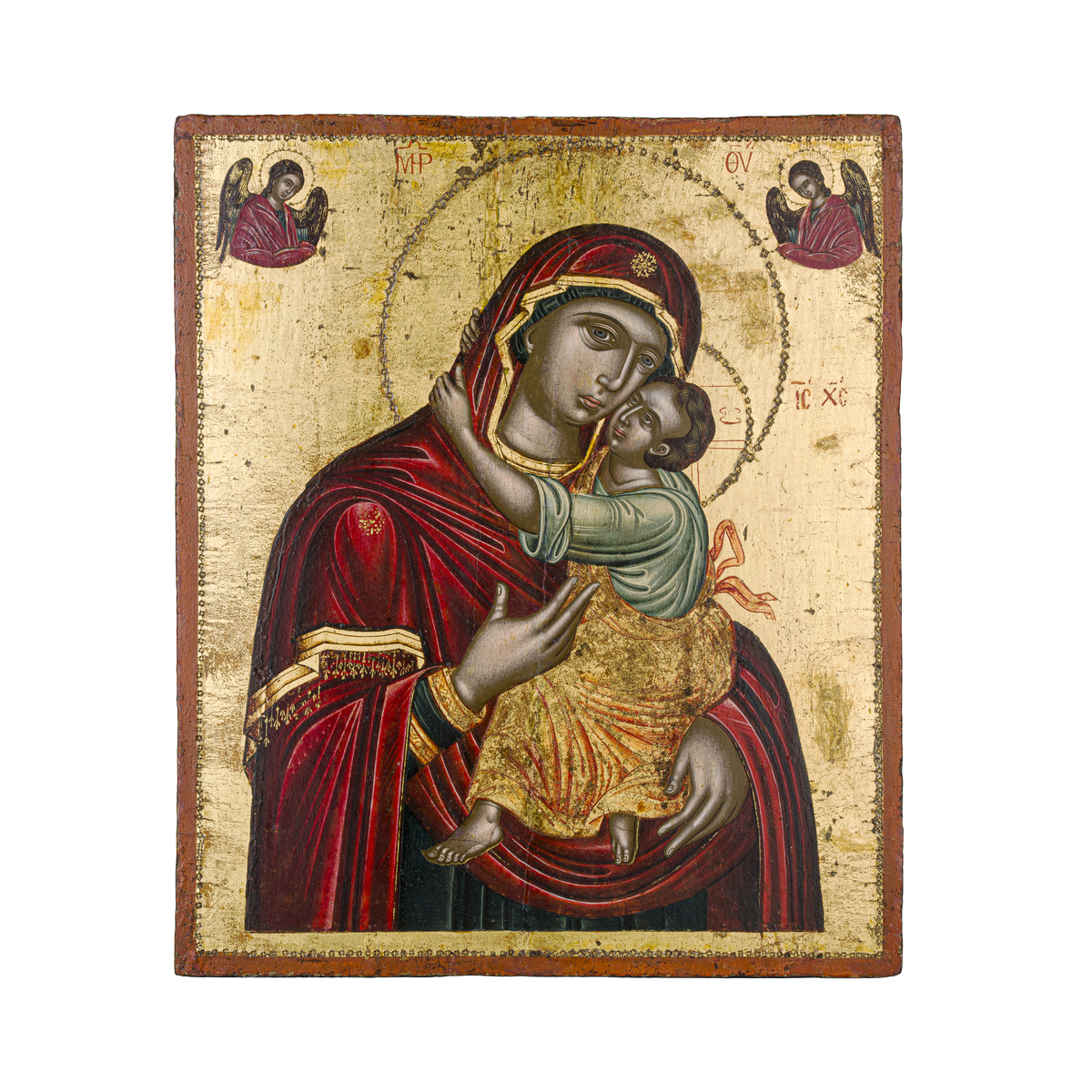
Icona veneto cretese del XVII secolo
Icona veneto cretese del XVII secolo
Vergine Eleousa o della Tenerezza
Tempera e oro su tavola
44 x 37 cm
La Vergine Eleousa, detta anche Madre di Dio della Tenerezza, ha origine nel cristianesimo bizantino. Essa è una variante della più antica Vergine Odigitria, ovvero la Vergine che indica la via, dalla quale si differenzia per la postura non più frontale, con chiari accenni al lato umano della Vergine e del Bambino, ripresi in un atto di tenerezza reciproca. Le testimonianze più antiche risalgono all'VIII-IX secolo e si ripetono nei secoli seguendo la parabola delle icone veneto-cretesi e del mondo del cristianesimo ortodosso.
A Veneto-Cretan icon of the 17th century
Virgin Eleousa (Our Lady of Tenderness)
Tempera and gold on panel
44 × 37 cm
The Virgin Eleousa, also known as Our Lady of Tenderness, originated in the Byzantine Christian tradition. It represents a variant of the earlier Hodegetria type, in which the Virgin points the way. Unlike the latter, the Eleousa is characterised by a less frontal composition, emphasising the human dimension of both the Virgin and Child through their tender physical interaction and reciprocal gestures of affection. The earliest examples date back to the 8th-9th centuries. This iconographic type continued to be reproduced over the centuries, particularly within the Veneto-Cretan school and the Eastern Orthodox Christian tradition.