 Il Ponte Casa d'Aste - Palazzo Crivelli - Via Pontaccio 12, 20121 Milano
Pre-Asta ASTA 801: ARREDI E DIPINTI ANTICHI IV tornata : dal lotto 797 al lotto 976
venerdì 30 ottobre 2026 ore 10:00 (UTC +01:00)
Giovanni Andrea Darif (Venezia,1801 - Milano,1870) (attr) Ritratto di Torquato
Giovanni Andrea Darif (Venezia,1801 - Milano,1870) (attr)
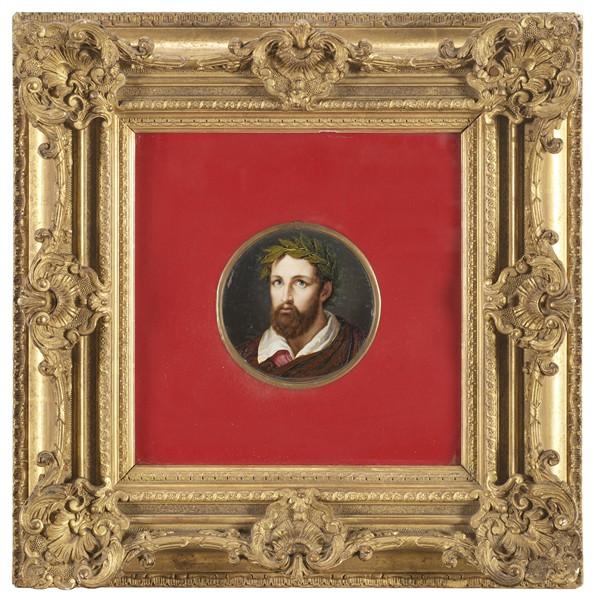
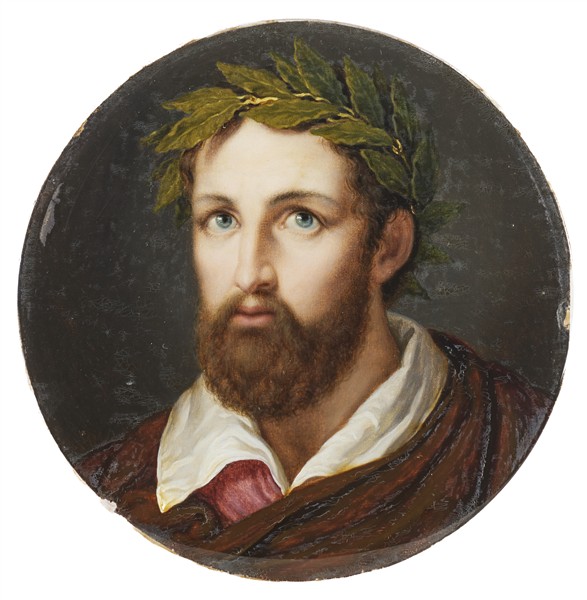
Ritratto di Torquato Tasso, verre-peint circolare
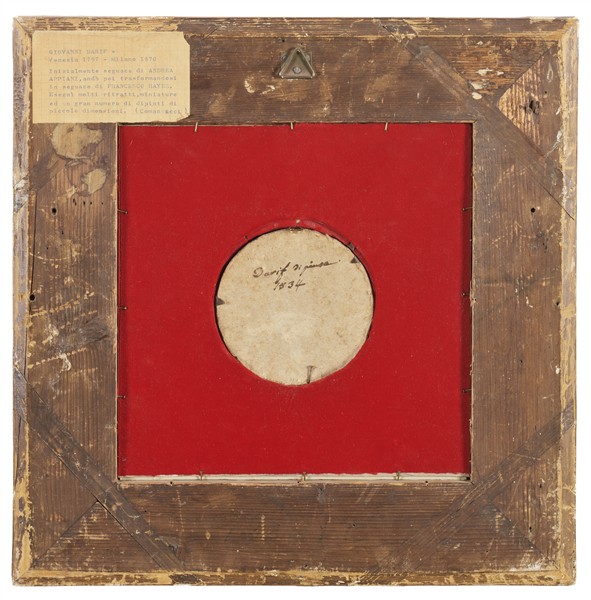
(d. cm 10) al retro del supporto in cartoncino iscritto "Darif dipinse 1834"
In cornice dorata a pastiglia con volute e valva di conchiglia (cm tot 37x37) (difetti e piccole mancanze)
Il poeta e scrittore della Gerusalemme Liberata (1581) è raffigurato con la corona d'alloro, simbolo di gloria poetica, che rimanda all'incoronazione che il Tasso ricevette in Campidoglio solo simbolicamente dopo la sua morte (1595)
Formatosi all'Accademia di Venezia con Teodoro Matteini, Giovanni Darif si diffuse nel 1824 a Milano, affermandosi tra i protagonisti delle esposizioni di Brera. La sua cifra stilistica segna il passaggio dal Neoclassicismo purista all'avvento del Romanticismo storico di Francesco Hayez. Accanto ai grandi cicli decorativi e alle tele di soggetto mitologico, Darif fu un celebrato e colto ritrattista. La sua produzione grafica e pittorica si distingue per la purezza del disegno e la sensibilità introspettiva, declinata spesso nell'omaggio ai grandi letterati del passato. Il presente Ritratto di Torquato Tasso, a lui attribuito, testimonia pienamente questo filone del Romanticismo ottocentesco, unendo l'alto valore celebrativo a una raffinata resa psicologica del poeta.
-EN
Giovanni Andrea Darif (Venice, 1801 - Milan, 1870) (attr.)
Portrait of Torquato Tasso, circular verre-peint (d. 10 cm), inscribed on the reverse of the cardboard support "Darif dipinse 1834". In a gilded pastiglia frame with scrolls and a scallop shell (total size 37x37 cm) (defects and minor losses).
The poet and author of The Liberation of Jerusalem (Gerusalemme Liberata, 1581) is depicted with a laurel wreath, a symbol of poetic glory. This references the coronation Tasso received on the Capitoline Hill, which took place only symbolically after his death (1595).
Trained at the Venice Academy under Teodoro Matteini, Giovanni Darif moved to Milan in 1824, establishing himself as a leading figure in the Brera exhibitions. His stylistic approach marks the transition from purist Neoclassicism to the advent of historical Romanticism led by Francesco Hayez. Alongside grand decorative cycles and mythological canvases, Darif was a celebrated and cultured portraitist. His graphic and painterly production is distinguished by the purity of draftsmanship and an introspective sensitivity, often expressed through tributes to the great literary figures of the past. The present Portrait of Torquato Tasso, attributed to him, fully exemplifies this current of nineteenth-century Romanticism, combining a high celebratory purpose with a refined psychological rendering of the poet.