 Il Ponte Casa d'Aste - Palazzo Crivelli - Via Pontaccio 12, 20121 Milano
Pre-Asta ASTA 801: ARREDI E DIPINTI ANTICHI I tornata : dal lotto 377 al lotto 489
mercoledì 28 ottobre 2026 ore 15:00 (UTC +01:00)
Da un modello di Andrea del Verrocchio (fine del secolo XVII- inizio secolo XVI
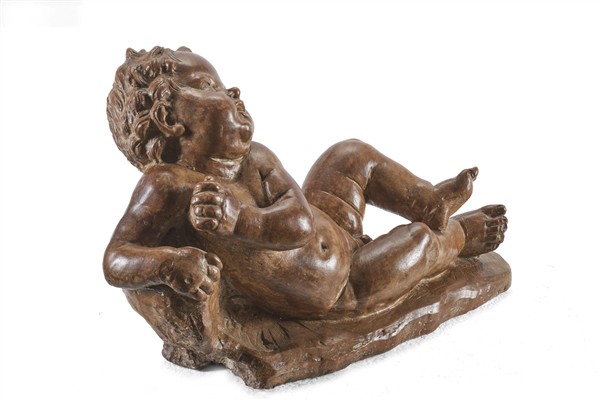
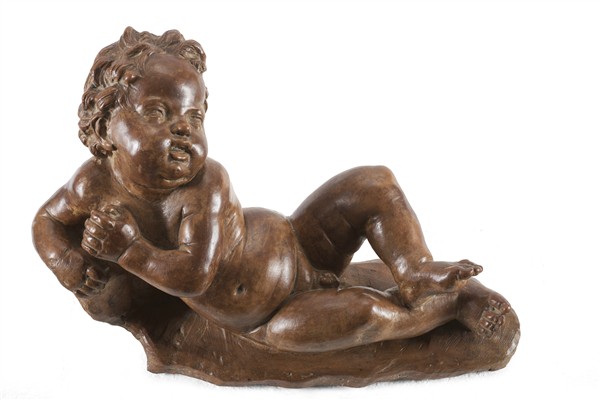
Da un modello di Andrea del Verrocchio (fine del secolo XVII- inizio secolo XVIII)
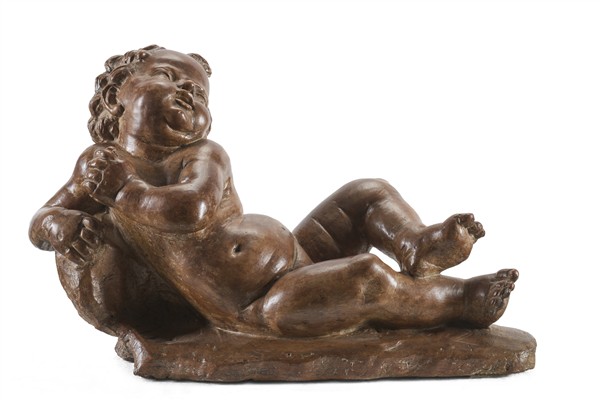
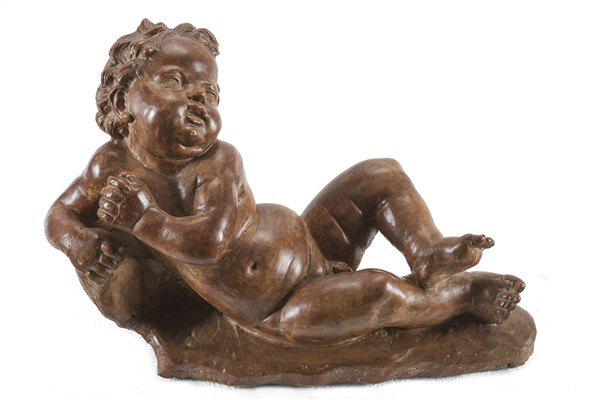
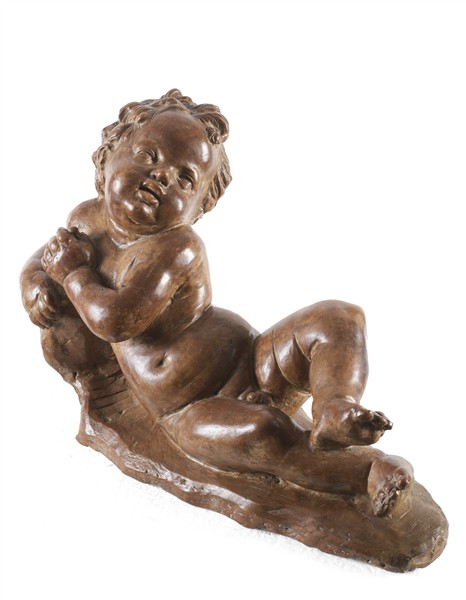
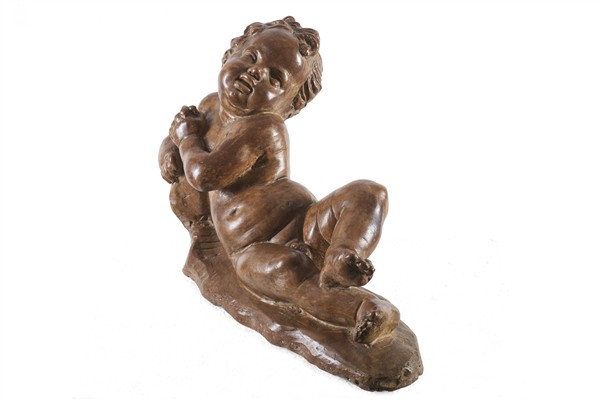
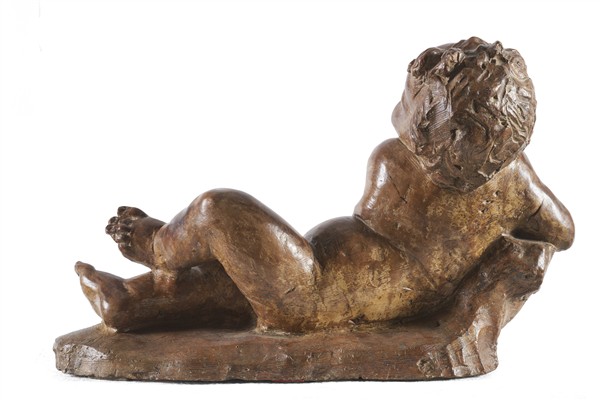
Putto disteso
Scultura in terracotta su base sagomata
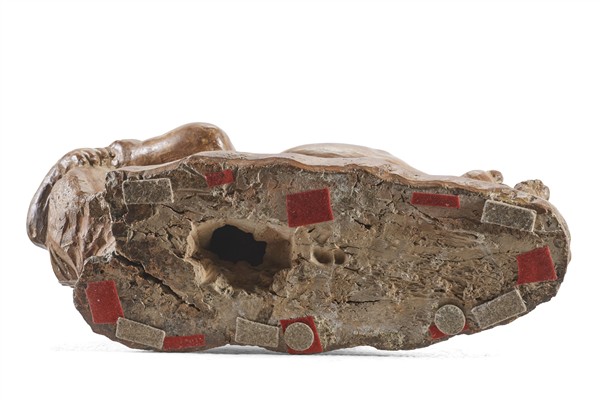
(cm 50x30) (difetti e restauri)
Nel 1490, a due anni dalla scomparsa di Andrea del Verrocchio, il fratello Tommaso redasse un inventario dei beni rivendicati di sua proprietà, tra i quali figuravano quattro putti in terracotta, tre dei quali descritti come "abbozzati". Sebbene privi di dettagli specifici, si ritiene che tra queste sculture vi fosse anche il prototipo del bambino reclinato da cui derivano l'esemplare qui presentato e altre versioni note.
L'invenzione originale ha dato vita a diverse varianti storiche, tra cui una coppia in terracotta – l'uno speculare all'altro – un tempo conservata al Kaiser-Friedrich-Museum di Berlino e andata distrutta durante la seconda guerra mondiale; le riproduzioni fotografiche d'epoca mostrano tuttavia una fattura troppo levigata per consentirne l'attribuzione diretta alla mano del maestro. Un altro esemplare in marmo, analogo al nostro tipo e oggi custodito presso i Fine Arts Museums di San Francisco, si presenta qualitativamente superiore alle versioni in bronzo conosciute, ma appare fortemente deteriorata e caratterizzata da un'esecuzione probabilmente troppo timida per essere ricondotta a Verrocchio o al suo collaboratore Francesco di Simone Ferrucci.
Per confronto si veda:
D. Allen, Italian Renaissance and Baroque Bronzes in The Metropolitan Museum of Art, New York, The Metropolitan Museum of Art, 2022.
-EN
After a model by Andrea del Verrocchio (17th-18th centuries)
Putto reclined
Terracotta sculpture on a moulded plinth
(50×30 cm)
(defects and restorations)
In 1490, two years after Andrea del Verrocchio’s death, his brother Tommaso drew up an inventory of the assets claimed as his property, which included four terracotta putti, three of which were described as ‘roughly modelled’. Although no specific details are given, it is believed that these sculptures also included the prototype of the reclining child from which the example presented here and other known versions are derived.
The original design gave rise to several historical variants, including a pair of terracotta sculptures – one mirroring the other – once housed at the Kaiser-Friedrich-Museum in Berlin and destroyed during the Second World War; however, period photographic reproductions show a finish that is too smooth to allow for direct attribution to the master’s hand. Another marble example, similar to our type and now housed at the Fine Arts Museums of San Francisco, is of a higher quality than the known bronze versions, but appears severely deteriorated and characterised by a style that is probably too timid to be attributed to Verrocchio or his collaborator Francesco di Simone Ferrucci
For comparison, see:
D. Allen, Italian Renaissance and Baroque Bronzes in The Metropolitan Museum of Art, New York, The Metropolitan Museum of Art, 2022.