
ASTA 210 - FINE CHINESE, ISLAMIC & ASIAN ART
-
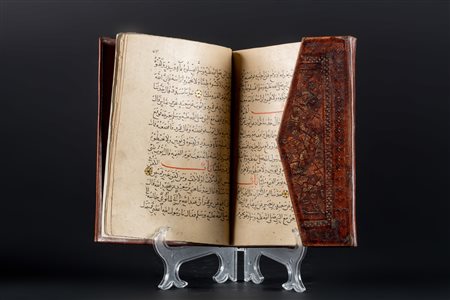
Lotto 363 Arte Islamica Sahih Al Bukhari (parte II) copiato da Imam Abi Abd Allah Mohammed Ebn Ismail Domini Mamelucchi, datato 721 H (1321 AD) . -. Cm 17,00 x 23,00. Manoscritto composto da 42 carte, ognuna con 13 righe di testo Nakshi scritto con inchiostro nero e separato da piccole rosette dorate, blu e rosse. Data riportata sulla prima pagina in basso a sinistra, mentre una carta postuma incollata sull'ultima pagina è datata 1301 (1884 AD) ed informa che il libro sia stato copiato dal personaggio indicato. Bellissima rilegatura Mamelucca in pelle con aletta, intagliata a motivo geometrico e dorata sull'esterno, mentre l'interno presenta simili motivi geometrici ed iscrizioni appena visibili che recitano: Muhammad rasul Allah (Maometto è il messaggero di Allah). Qualche restauro sulla carta.
Arte Islamica Sahih Al Bukhari (parte II) copiato da Imam Abi Abd Allah Mohammed Ebn Ismail Mamluk domains, dated 721 H (1321 AD) . . Cm 17,00 x 23,00. Manuscript made up of 42 leaves, each with 13 lines of text in Nakshi script in black ink and separated by small golden, blue and red rosettes. The date is on the lower left side of the first page, while a later page, glued to the last page, bears the date 1301 (1884 AD) and says that the manuscript was copied by the person mentioned. Beautiful Mamluk leather binding with flap, carved with a geometrical pattern and gilded on the exterior side, while the interior bears similar geometrical patterns, and barely visible inscriptions: Muhammad rasul Allah (Muhammad is Allah’s messenger). Some signs of restoration on the paper. -
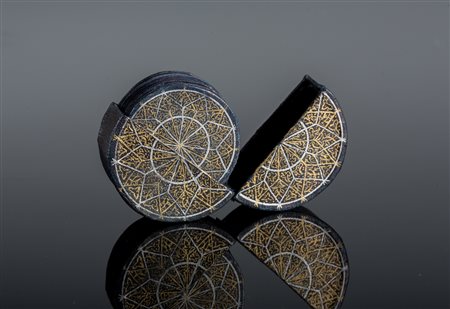
Lotto 364 Arte Islamica Piccolo Corano tascabile circolare con rilegatura in pelle dorata copiato da Ahmad Hamdi Almarrruf Be Emam Jame Sultan Salim Khan datato 1288 (1871 AD) . -. Cm 5,50 x 2,50. Pregevole piccolo corano con copertina e fodero dipinti con motivo geometrico a raggiera dorato con arabeschi. L'interno prevede un frontespizio con simile decorazione con l'aggiunta del rosso, 168 carte totali -di cui due (inizio e fine) vuote ed una con un piccolo taglio- delimitate da filetto circolare argentato, ognuna con 30 righe di testo scritto in oro e titoli in argento.
Arte Islamica A mini pocket round Quran with gilt leather binding copied by Ahmad Hamdi Almarrruf Be Emam Jame Sultan Salim Khan dated 1288 (1871 AD) . . Cm 5,50 x 2,50. Fine small Quran, with cover and case painted with a golden geometrical motif in a radial pattern, with arabesques. The inside includes a title page with similar decorations, but with the addition of red; 168 leaves, of which two (first and last) are empty, and one presents a small cut, framed by a silver circular decorative line. Each of the leaves has 30 lines of text written in gold and with the titles in silver. -
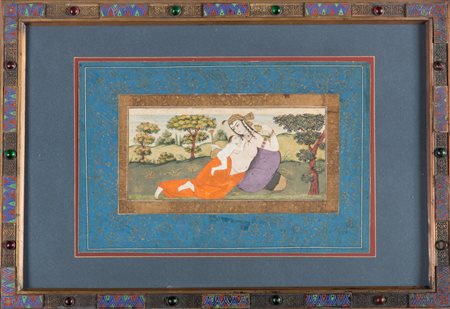
Lotto 365 Arte Islamica Miniatura raffigurante una maternità Iran, forse Isfahan, dinastia Safavide, seconda metà XVII secolo Pigmenti naturali e oro su carta . -. Cm 21,00 x 31,50. Raffinato dipinto raffigurante una donna a petto scoperto, adagiata sul terreno, appoggiata ad un cuscino e con un bambino in grembo. La donna ha coperto le gambe con un drappo arancione e mostra una bottiglia di vino nella sua mano destra ed una coppetta per berlo nella sinistra. Intorno ai due protagonisti alberi, prati e colline di evidente stampo europeo. Inserita in due cornici, una sottile dorata ed una blu, entrambe dipinte con arabeschi dorati, mentre la cornice esterna presenta un decoro metallico smaltato con paste di vetro colorate incastonate. Questo tipo di raffigurazioni nella Persia tardo Safavide scaturiscono da due fattori che influenzarono profondamente gli artisti: le opere di Riza Abbasi e l'arte Europea. L'influenza di quest'ultima è evidente in questo dipinto sia nel soggetto, sia nella resa naturalistica dello sfondo, mentre a Riza Abbasi (1565-1635) è da accreditare un'iniziale apertura alla ritrattistica e ai nudi femminili. Nel corso del XVII secolo si assiste ad una proliferazione di nudi e ad un'accentuazione della vena erotica e provocatoria, come è osservabile nella posa della protagonista di questo dipinto e nel suo indugiare a bere vino enfatizzato dal suo sguardo languido a cui fa da contraltare lo sguardo adorante del piccolo. Con cornice 34 X 49 cm
Arte Islamica A miniature of Maternity with special frame Safavid Iran, Possibly Isfahan, second half 17th century Natural pigments and gold on paper . . Cm 21,00 x 31,50. Exquisite painting of a bare chested woman, lying on the ground, leaning against a pillow and with a child in her lap. The woman has her legs covered by an orange cloth, and holds a bottle of wine in her right hand, and a cup in her left hand. Around the two characters are trees, fields and hills in what is an obvious European style. Double frame, a thin gilded one and another blue, both of which painted with golden arabesques, while the exterior frame shows metallic enameled decorations, set with colored glass paste. This kind of depictions, from late Safavid Persia, originates from two factors deeply influencing the artists: the works of Riza Abbasi and European art. The influence of the latter is clear both in the subject of this painting and in the naturalist depiction of the background, while an initial opening to the portrayal of female nudes is to be attributed to Riza Abbasi (1565-1635). During the XVII century there was a proliferation of nudes and a stress was placed on their erotic and provocative side, as shown by the pose and activity of the protagonist of this painting, emphasized by her dreamy look and contrasted by the revering look of the child. With frame 34 x 49 cm. -
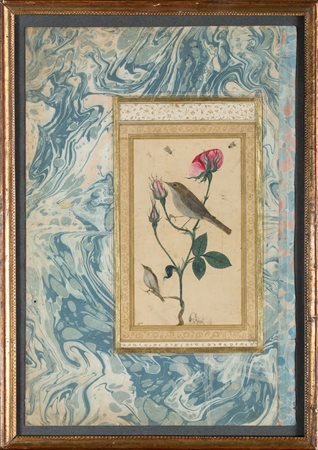
Lotto 366 Arte Islamica Pagina di album illustrata ed illuminata firmata da 'Abdullah Bukhari Turchia, dinastia Ottomana, XVIII secolo Gouache e oro su carta . -. Cm 15,00 x 26,50. Pregevole dipinto raffigurante sul fronte due usignoli su un ramo di rosa con insetti sopra di loro e sul retro una pagina composita raffigurante due uomini impegnati in una conversazione e due rose di diversa altezza. Entrambe con margini effetto marmorizzato, il fronte entro cornice con arabeschi dorati, il retro con due pannelli con fiocchi dorati. Firmato sul fronte in basso a sinistra. 'Abdullah Bukhari (attivo 1725 - 50) fu uno dei più famosi pittori turchi del XVIII secolo, specializzato in album di fiori, come questo esemplare, e nella ritrattistica femminile. Egli fu pittore di corte per il sultano Ahmed III (r.1703 - 30) durante l'epoca chiamata "Era dei Tulipani" per la mania che spingeva i membri della corte e i cittadini benestanti a spendere cifre folli anche solo per un singolo bulbo raro. 41 X 28 cm 47 X 33 cm con cornice
Arte Islamica An illustrated and illuminated double sided album page signed by 'Abdullah Bukhari Ottoman Turkey, 18th century Gouache and gold on paper . . Cm 15,00 x 26,50. Fine painting depicting, on the front, two nightingales resting on a rose branch, with insects above them, and a composite page with two men engaged in conversation and two roses of different heights on the back. Both sides present edges with marble effects, the front within a frame with golden arabesques, and the rear with two panels with golden ribbons. Signed on the front, in the lower left side. Abdullah Bukhari (active between 1725 and 1750) was one of the most famous Turkish painters of the XVIII century, specializing in floral albums, and in female portraits. He was the court painter for the sultan Ahmed III (reigning between 1703 and 1730), during the period referred to as “Tulip Era”, for the habit of court members and rich individuals of spending enormous sums of money even for a single rare tulip bulb. 41x28 cm 47x33 cm with frame -
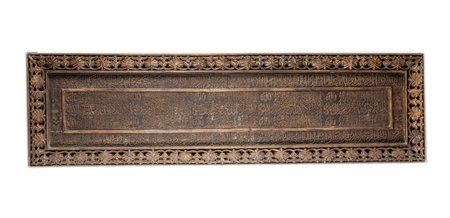
Lotto 367 Arte Islamica Importante pannello calligrafico in legno India o Turchia, XIX secolo . -. Cm 255,00 x 71,00. Grande pannello intagliato a rilievo con cartigli e rondelle contenenti iscrizioni calligrafiche entro cornice finemente intagliata con motivo floreale stilizzato. Iscrizioni: Nella cornice esterna: la prima sura (Al-Fatiha) del Corano che si ripete: Nel nome di Allha, il Clemente, il Misericordioso. La lode appartiene ad Allah, Signore dell'Universo Re del Giorno del Giudizio Te solo noi adoriamo e a Te chiediamo aiuto Giudaci sul retto Sentiero Il Sentiero di coloro che hai colmato di grazia, non di coloro che sono incorsi nella Tua ira, né degli sviati Nella fascia centrale: la Shahadah: "Non c'è divinità se non Dio (Allāh) e Maometto è il Suo Messaggero" Sopra e sotto la Shahadah: ayat (versetto) 153 Sura Al-Baqara (La Giovenca): O voi che credete, cercate aiuto nella pazienza e nella preghiera, poichè Allah è con coloro che perseverano. Nelle rondelle: Allah Per un esemplare comparativo si veda Sotheby's Arts of the Islamic world, 8 ottobre 2014 lotto 29 Provenienza: Collezione privata europea dal 1982
Arte Islamica An Important Islamic carved calligraphic wooden panel India or Turkey, 19th century . . Cm 255,00 x 71,00. Big panel, with high-relief cartouches and circles containing calligraphic inscriptions, and enclosed by a finely carved frame with a stylized floral motif. Inscriptions: In the exterior frame; the first sura (Al-Fatiha) of the Quran, repeated: In the name of Allah, the Most Gracious, the Most Merciful: All Praise is due to Allah, Lord of the Universe The Most Gracious, the Most Merciful. Owner of the Day of Judgement. You alone do we worship, and You alone we turn to for help Guide us to the straight path; The path of those on whom You have bestowed your grace, not of those who have earned Your anger, nor of those who went astray In the central band; the Shahadah: “There is no god but God. Muhammad is the messenger of God.” Above and below the Shahadah: ayat (verse) 153 sura Al-Baqara (The Cow): O you who believe, seek help with patient perseverance and prayer, for Allah is with those who patiently persevere. In the circles: Allah For a similar item, cf. Sotheby’s Arts of the Islamic world, October 8, 2014, lot 29. Provenance: European private collection, since 1982 -
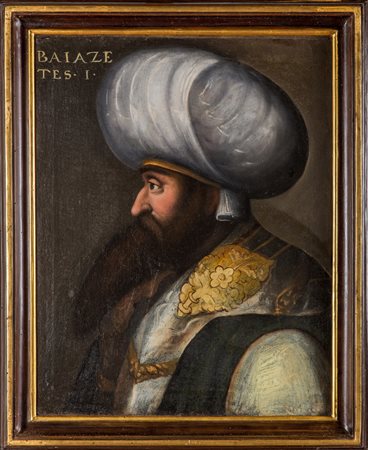
Lotto 368 ARTE ISLAMICA Ritratto del sultano Ottomano Bayezid I (r. 1389 - 1402) Attr. Cristofano dell'Altissimo (Firenze 1525 - 1605), XVI secolo Olio su tela. . Cm 50,00 x 64,50. Bellissimo ritratto del sultano raffigurato di profilo con la lunga barba appuntita, un mantello riccamente decorato ed un grande turbante bombato. L'iscrizione in alto a sinistra lo identifica come Baiazetes I. Bayezid I fu il quarto sultano dell'impero ottomano (vissuto dal 1360 al 1403), figlio di Murad I, salito al trono nel 1389 e conosciuto con il nome di Yildirim (La Folgore). Egli espanse il dominio Ottomano nei Balcani ed in Anatolia, mise in fuga i crociati, nel 1402 fu sconfitto dalle armate di Timur nella battaglia di Ankara e morì in prigionia. Questo dipinto mostra stringenti analogie con un dipinto, di identico soggetto, conservato agli Uffizi di Firenze e parte della serie gioviana iniziata nel 1552 per ordine di Cosimo I de' Medici che inviò il pittore Cristofano dell'Altissimo a copiare i ritratti della Galleria Universale degli Uomini, collezionati da Paolo Giovio, vescovo di Como, nella sua villa pliniana a Borgovico. Fu proprio in quella dimora che, nel 1562, il pittore fiorentino dipinse il ritratto oggi nella Galleria degli Uffizi (Acc. No. 1890-3053 e pubblicato in Ottoman Splendour in Florentine Collection, catalogo della mostra presso il Sakip Sabanci Muzesi di Istanbul, 2004, pp. 98-99). Un ritratto di identico soggetto, di scuola del Veronese, è stato venduto recentemente da Sotheby’s Londra, Arts of the Islamic World, 19 ottobre 2016, lot 294. Per continuare a leggere contattare il responsabile di dipartimento o richiedere condition report. Provenienza: Collezione Privata Milanese
ARTE ISLAMICA A portrait of the Ottoman Sultan Bayezid I (r. 1389 - 1402) Attr. to Cristofano dell'Altissimo (Florence 1525 - 1605), 16th century Oil on canvas . . Cm 50,00 x 64,50. Beautiful portrait of the sultan, pictured in profile, with a long pointed beard, a richly ornate cloak and a big rounded turban. The inscription in the upper left side identifies him as Baiazetes I. Bayezid I was the fourth sultan of the Ottoman Empire (1306-1403), son of Murad I; he rose to power in 1389, and became known with the nickname of Yildirim (The Thunderbolt). He expanded the Ottoman domain through the Balkans and Anatolia and defeated the crusaders, but was in turn defeated in 1402 at the battle of Ankara by the armies of Timur, and died in captivity. This painting displays close similarities with another painting of the same subject, held in the Uffizi in Florence, and part of the Giovio collection started in 1552 by order of Cosimo I de’ Medici, who charged the painter Cristofano dell’Altissimo with copying the portraits of the Galleria Universale degli Uomini of Paolo Giovo, bishop of Como, held in his villa in Borgovico. There the Florentine painter painted in 1562 the portrait now in the Uffizi (Acc. No. 1890-3053 published in Ottoman Splendour in Florentine Collection, catalogue of the exhibition at the Sakip Sabanci Muzesi of Istanbul, 2004, pp. 98-99). A portrait of the same subject, school of Veronese, has been recently sold by Sotheby’s London, Arts of the Islamic World, October 19, 2016, lot 294. Contact the Head of Department or ask for a condition report in order to continue reading. With frame: 80x60 cm Provenance: Private Collection, Milan. -
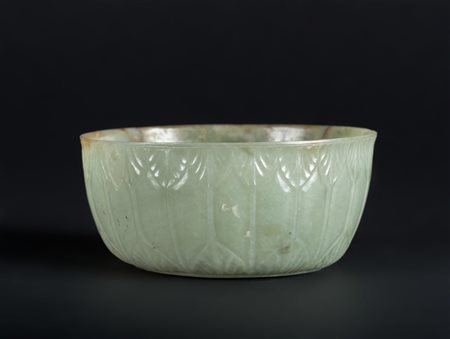
Lotto 369 Arte Indiana Coppa in giada India, XVIII - XIX secolo . -. Cm 16,50 x 7,00. Incisa con grande fiore sotto la base e pareti con pennelli e foglie alle estremità. Restauro.
Arte Indiana A jade bowl incised with flower and petals India, 18th - 19th century . . Cm 16,50 x 7,00. Cracked or repaired. -
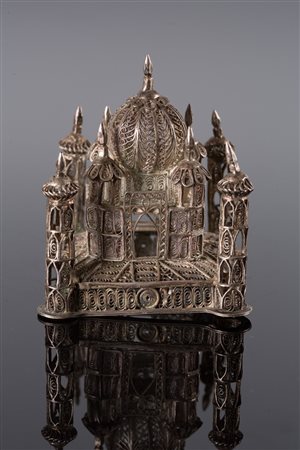
Lotto 370 Arte Islamica Piccolo modello di moschea in filigrana d'argento Turchia o India, XIX secolo . -. Cm 5,80 x 7,50 x 5,80.
Arte Islamica A small silver filigree mosque model Turkey or India, 19th century . . Cm 5,80 x 7,50 x 5,80. -
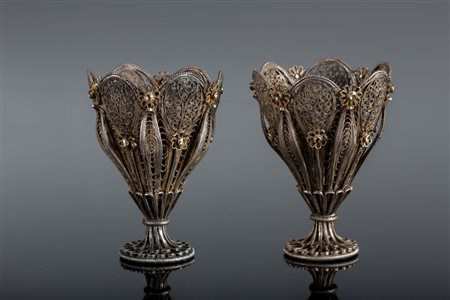
Lotto 371 Arte Islamica Coppia di zarfs in filigrana d'argento con piccoli diamanti Turchia ottomana, XIX secolo . -. Cm 4,50 x 6,00. Dalla tipica forma con base circolare e strozzatura che poi si riapre più ampia per finire con profili lobati, risultano finemente lavorati in forma di petali con fiorii, sedi per piccoli diamanti. Entrambi recano custodia originale di forma troncoconica.
Arte Islamica A pair of black leather boxed silver filigree zarfs with small diamonds Ottoman Turkey, 19th century . . Cm 4,50 x 6,00. -
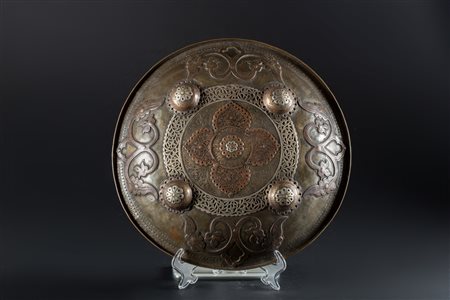
Lotto 372 Arte Islamica Scudo in ottone, acciaio e rame Turchia, periodo Ottomano, tardo XIX secolo . -. Cm 33,00. L'esterno decorato con tralci vegetali, l'interno presenta un piccolo cuscino e due lacci in pelle per imbracciarlo.
Arte Islamica A brass, steel and copper military shield Turkey, Ottoman period, late 19th century . . Cm 33,00. -
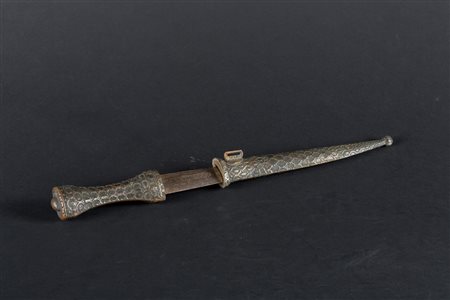
Lotto 373 Arte Islamica Pugnale in acciaio con fodero e tughra di Mehmed V (r. 1909 - 1918) Turchia, inizio XX secolo . -. Cm 34,00. Impugnatura a forma di clessidra, la lama a doppio taglio riporta un'iscrizione ed una data improbabile (forse traducibile con calendario Rumi). L'elsa ed il fodero sono stampati con motivi ovali e lobati concatenati e piccoli motivi floreali in prossimità dei margini. Iscrizione sul retro: non c'è altro Dio al di fuori di Allah e Mohammad è il suo messaggero.
Arte Islamica Turkish steel dagger with scabbard and tughra of Mehmed V incised on the blade OttomanTurkey, Mehmed V period,1909-1918. . Cm 34,00. -
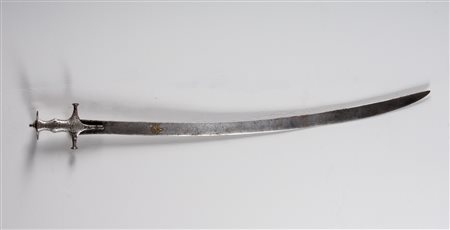
Lotto 374 Arte Islamica Shamshir indo-persiana con elsa ageminata in argento India Moghul, XVIII secolo . -. Cm 89,00. Elsa in ferro dalla tipica forma a croce con guarda mano composto dai bracci corti della croce terminanti in due rigonfiamenti. Lunga lama, con macchie di ruggine, a taglio singolo decorata con un cartiglio dorato recante un'iscrizione.
Arte Islamica Indo-Persian shamshir with silver inlaid hilt Mughal India, 18th century . . Cm 89,00. An iron hilt of typical form composed of a cross-guard formed with a pair of short quillons with swollen terminals and with a sturdy curved single edged rusty steel blade with back edge decorated with a gilt painted inscribed cartouche.