
Auction 86 - Glyptics and Ancient Jewelry
-
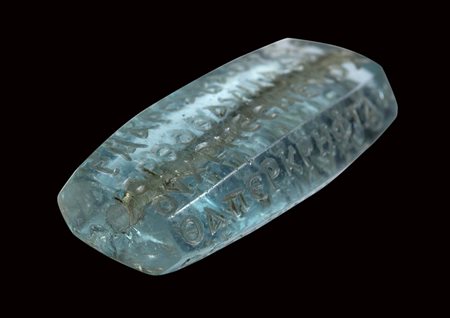
Lotto 217 A rare roman beryl hexagonal prism magical amulet.
2nd - 3rd century A.D.
16 x 32 x 8,5 mm
The magical faceted amulet is engraved with various inscribed lines. On the two larger faces :
ΒΑλΧΑμΧΗΒPΑΟ -> Bachaxi
YΕCΤΑΔωΝΑΙΕP -> Aδωναιε, Adonaî
ΙμωΘΑΓΙΑΔYΝΑ -> Iaô, ἁγία (saint)
ΡμΑΡCΑΒΑΟYΦΘ -> Cαβαωθ, Sabaôth
ΟΠΘΟΘΑYμΑΘΑμ -> Θŵθ, name of the egyptian god Thot and palindrome μΑΘΑμ
ΟYΧΠΗΕCμΕΝΟΧ
On the 4 edges :
μΙCΒΟΗΘΕΙμΟΙ -> we can read the expression εìς βοηθει, “Lord, help me!", we find the same inscription on a round hematite gem, coll. Seyrig, AA.Seyrig. 63
CΑΒΑωΘΟYΕΔΗω -> we read the two names of the lord Sabaôth, Yahvé
ΘΑΠΕΡΚΡΗΦΤΑω -> name of Râ, and the last letter of hebrew alphabet
ΡΒΔωΤΟΛΕΟΡω
This amulet can be attached to the group of rock crystal, amethyst, beryl, chalcedony stones using as magic tools for magicians and wizard. According to Lactantius Placidus, in Statii "Thebaida" commentum, IV.516, the magicians possessed "sphragids quas putant Dei nomina continere" (seals which the magicians believe to contain the names of God).
The unusual and rare aspect of this amulet lies not only in its polygonal structure but also in its function which differs from the other gnostic gems. The choice of a six-sided structure can also refers to the importance and power of various numbers in magic, the 6 being a multiple of 3, a particularly important number.
Large stone dimension and high quality of execution. Perforated lengthwise. Excellent state of conservation. Extremely rare.
Parallels: Kelsey Museum, inv. 0000.02.6134
Michel, 2001, p.338, n°587
Bibliography :
Mastrocinque, SGG I, p. 5
U.K., private collection 70's, in the same family since then. -
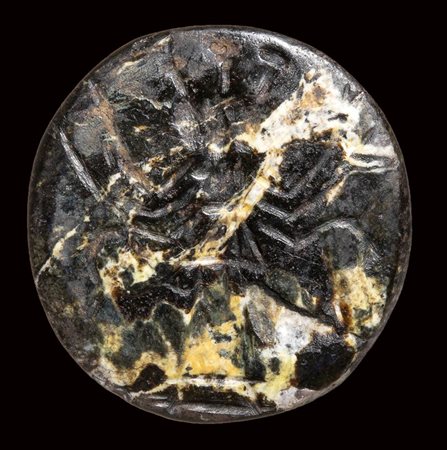
Lotto 218 A roman black jasper magical intaglio. Hecate.
2nd - 3rd century A.D.
16 x 16 x 4 mm
The lentoid shaped intaglio is engraved with the figure of the three-headed goddess Hecate.
Her arms rising in a gesture of praying or putting a spell on. Groundline. Slightly butn stone. Wear marks. Traces of the iron setting on the backside.
U.K. private collection -
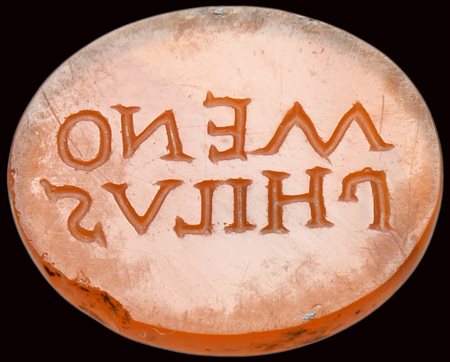
Lotto 219 A roman carnelian intaglio. Inscriptions.
1st century B.C. - 1st century A.D.
10 x 11 x 1 mm
Inscription on two lines (correctly readible on the impression): MENO-PHILVS ("Menophilus"). Personal name referable to the owner of the intaglio. Attractive vivid color of the stone.
U.K., private collection -
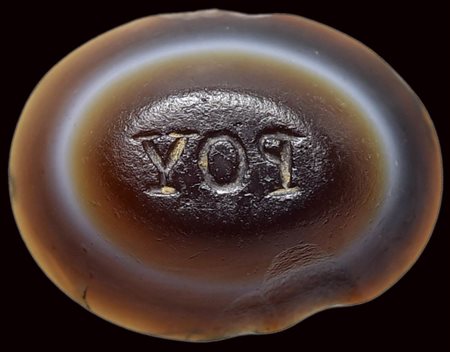
Lotto 220 A roman agate intaglio. Inscription.
2nd - 3rd century A.D..
8 x 11 x 4,5 mm
Truncated shape bezel. Three greek letters: POY. Wear marks. Chipping on the edge.
U.K private collection -
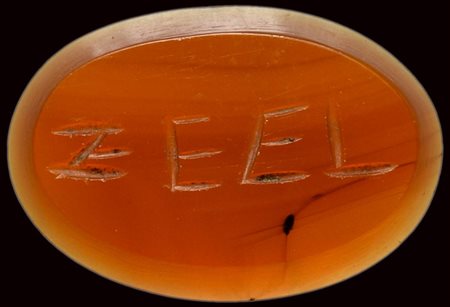
Lotto 221 A roman carnelian intaglio. Inscription.
2nd - 3rd century A.D.
7 x 10 x 2 mm
Four letters: ZEEL. Attractive color of the stone.
U.K private collection -
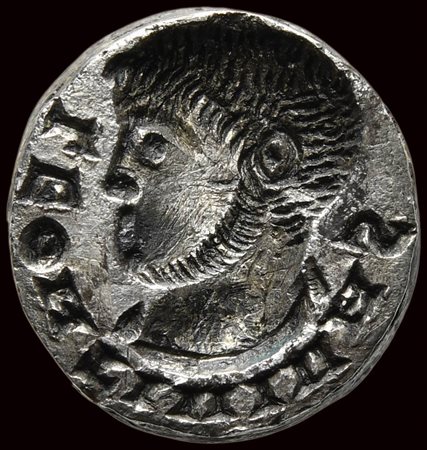
Lotto 222 A rare roman silver engraved seal. Male portrait.
End of the 3rd- Beginning of the 4th century A.D.
Diam. 10 x 4 mm 2,64 grs
The head is facing left, surrounded by the inscription LEONTI-VIVAS. The effigy is characterized by a short hairflow and a drawn beard, both referable to the imperial models of the late 3rd century A.D. (Massimino Daia, Costanzo Cloro, Massenzio). The inscription contains an auspicious meaning to Leontius. This seal was probably mounted into a ring, traces of which are still on the reverse. Excellent preservation.
Parallels: Alföldi, M.R. - 1950 - Aranykincselet Brigetioból a III. Század végéröl, vol. 48-49, pp. 5-9.
European private collection. -
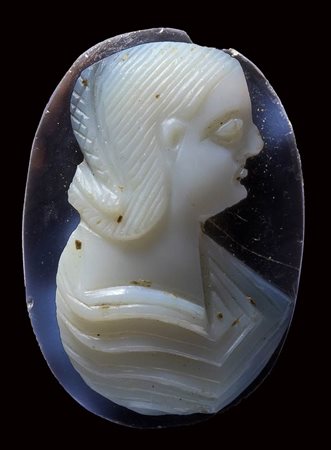
Lotto 223 A late roman onyx cameo. Female bust.
3rd century A.D.
16 x 22 x 9 mm
The effigy is in profile to the right. The hair forms a striped mass, which falls down on the neck in a braid and arching ("helmfrisur" hairdo). The ear is uncovered; the neck is elongated, the eye prominent. The bust is draped, the folds of the tunic are engraved with angular pleats. Probably a private portrait. The bust is sculpted in high relief with undercut from the background. Slight chip on the edge. Fine condition.
Parallel: M. Henig, H. Molesworth, The Complete Content Cameos, pp. 58-64.
U.K private collection, London. -
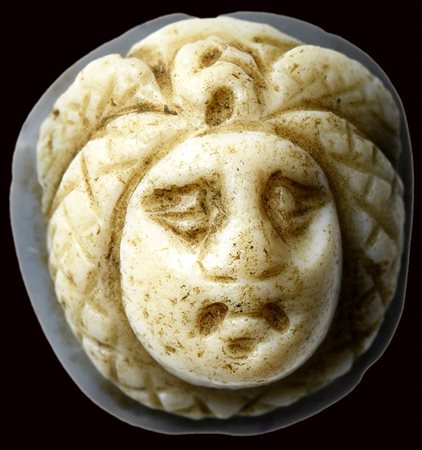
Lotto 224 A roman onyx cameo. Medusa head.
2nd - 3rd century A.D.
12 x 12 x 9 mm
The face is in three-quarters, executed in high relief. Above, on the head, the wings. Subject of an apotropaic and protective value. Wear marks.
Parallels: M. Henig, The Content Cameos, pp. 88-92; M. Henig, H. Molesworth, The Complete Content Cameos, pp. 183-192 ("Gorgoneia").
European private collection 80's -
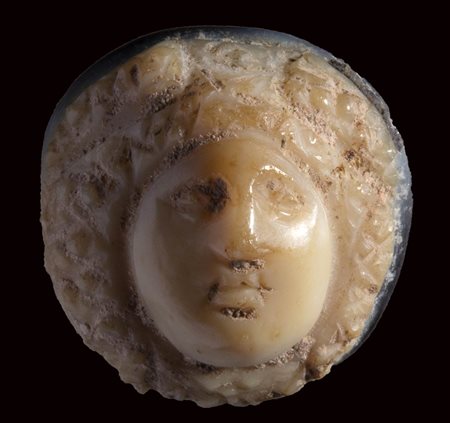
Lotto 225 A late roman onyx cameo. Medusa mask.
2nd - 3rd century A.D.
15 x 16 x 11 mm
Frontal head of Medusa executed in high relief. Above, on the head, the wings. Subject of apotropaic and protective value. Slight wear marks.
Parallels: M. Henig, The Content Cameos, pp. 88-92; M. Henig, H. Molesworth, The Complete Content Cameos, pp. 183-192 ("Gorgoneia").
U.K. private collection, London. -
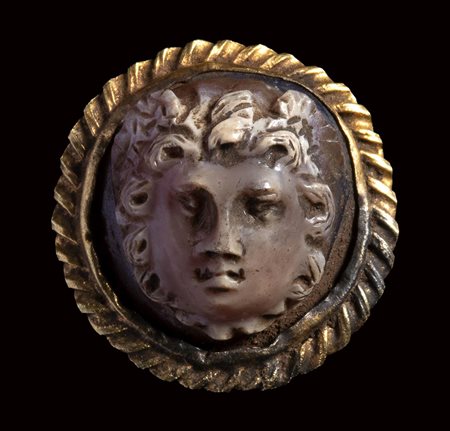
Lotto 226 A roman agate cameo mounted in an ancient gold brooch. Medusa mask.
2nd - 3rd century A.D.
Cameo : 17 x 17 x 18 mm
4,25 g
The front facing winged head of Medusa is depicted as a rounded face with thick hair. The stone, slightly burnt on the surface, was cutted in very high relief and mounted in a gold brooch. Wear marks. Intact specimen, rare in this fine condition.
Parallels: M. Henig, H. Molesworth, The Complete Content Cameos, pp. 183-192.
U.K private collection -
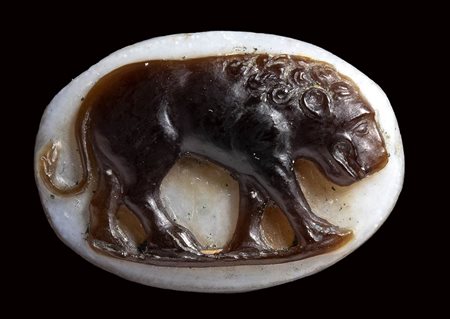
Lotto 227 A fine late Roman sardonyx cameo. Lion.
3rd-4th century AD.
13 x 19 x 6 mm
The mighty animal, symbol of strength and power, is represented in profile facing right. The mouth is half-open, a massive body; the tail is sinuous with the end facing upwards. The groundline and the figure are honey-brown in color, the bottom is white with brown shades on the edges. Empire. Work inspired by the classic late Hellenistic and Roman models of the early imperial period.
Parallels: sardonyx cameo of the National Archelogical Museum of Naples (inv. No. 25969/136), almost the same in type. Slight signs of wear. For comparison: U. Pannuti, The glyptic collection. National Archaeological Museum of Naples, vol. 2, pp. 273-274.
European private collection. -
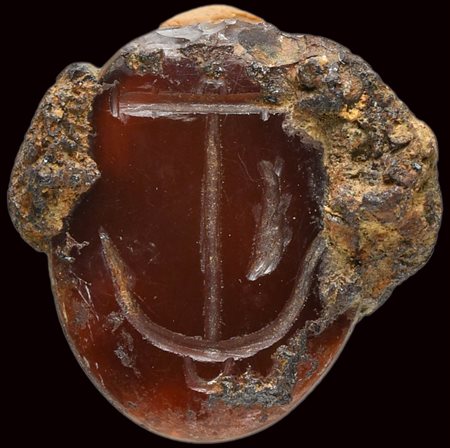
Lotto 228 A late roman carnelian intaglio. Christological emblem.
3rd - 4th century A.D.
13 x 12,5 x 4 mm
The emblem is composed by an anchor and a fish. Traces of the iron ring mounting. Allegory of salvation and hope. Deep red color of the stone. Rare.
U.K private collection