
Auction 85 - Antiquities
-
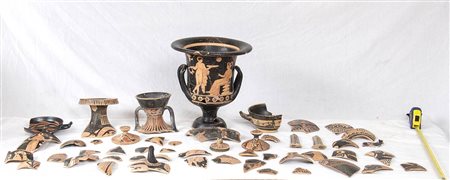
Lotto 49 GROUP OF APULIAN AND CAMPANIAN VESSELS AND FRAGMENTS
5th - 4th century BC
This large lot is composed of a rich group of vessels, which are interesting examples of the Apulian and Campanian manufacture. The lot includes a red-figure restored krater, calyx type, lids and various fragments of kylikes or skyphoi, amphorae, olpai and kraters. Several fragments are also in black-figure. The iconographic themes refer to the Dionysian and ritual sphere. Provenance: Collection returned by the German Judicial Authority to Herakles Numismatik und Antiquitäten GmbH (München), who acquired it on the European art market since the 1970s; from 2000s the entire collection is located in the United Kingdom; some objects of this collection were bought subsequently by the Italian Government (e.g.: bari.repubblica.it - Archeologia, torna in Puglia la stele dauna di oltre 2.500 anni fa: presa all'asta con una colletta). Almost all objects need restoration, if well executed will be an excellent investment, also a good exercise for scientific or academic purposes. Lot sold as seen, no returns. -
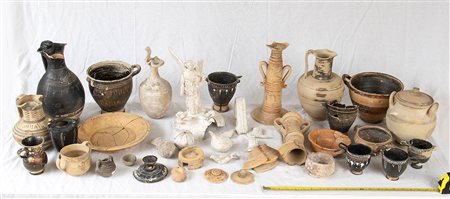
Lotto 50 GROUP OF CANOSINE AND APULIAN VESSELS AND FRAGMENTS
4th - 3rd century BC
This large lot is composed of a rich group of vessels, which are interesting examples of the Apulian polychrome pottery, from Canosine, Daunian and Gnathia manufactures. The lot includes fragments and partially preserved vessels, as: skyphos, cup-skyphos, jugs, oinochoai, olle, lebes and lekanis lids, cups; rare examples of thymiaterions, an altar, a standing winged goddess, doves and pome, typicals of the Canosine figurative vases. Provenance: Collection returned by the German Judicial Authority to Herakles Numismatik und Antiquitäten GmbH (München), who acquired it on the European art market since the 1970s; from 2000s the entire collection is located in the United Kingdom; some objects of this collection were bought subsequently by the Italian Government (e.g.: bari.repubblica.it - Archeologia, torna in Puglia la stele dauna di oltre 2.500 anni fa: presa all'asta con una colletta). Almost all objects need restoration, if well executed will be an excellent investment, also a good exercise for scientific or academic purposes. Lot sold as seen, no returns. -
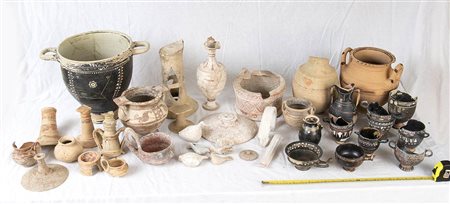
Lotto 51 GROUP OF CANOSINE AND APULIAN VESSELS AND FRAGMENTS
4th - 3rd century BC
This large lot is composed of a rich group of vessels, which are interesting examples of the Apulian polychrome pottery, from Canosine, Daunian and Gnathia manufactures. The lot includes fragments and partially preserved vessels, as: skyphos, cup-skyphos, jugs, oinochoai, olle, lebes and lekanis lids, cups; rare examples of thymiaterion, an altar, a pyxis, doves, typicals of the Canosine figurative vases. Provenance: Collection returned by the German Judicial Authority to Herakles Numismatik und Antiquitäten GmbH (München), who acquired it on the European art market since the 1970s; from 2000s the entire collection is located in the United Kingdom; some objects of this collection were bought subsequently by the Italian Government (e.g.: bari.repubblica.it - Archeologia, torna in Puglia la stele dauna di oltre 2.500 anni fa: presa all'asta con una colletta). Almost all objects need restoration, if well executed will be an excellent investment, also a good exercise for scientific or academic purposes. Lot sold as seen, no returns. -
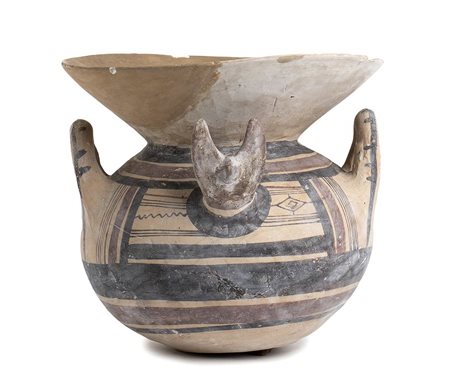
Lotto 52 DAUNIAN OLLA
Apulia, Subgeometric Period I, ca. 550 - 400 BC
height cm 22; diam. cm 24,5
Characterized by the typical broad funnel-shaped rim, the globular body and a pair of stylized animal protome between the arched handles. Sporadic lacks of the original colours and partially restored rim. Provenance: English private collection, according to the heirs possibly purchased in some auction or Art Gallery during 1970s-1980s. -
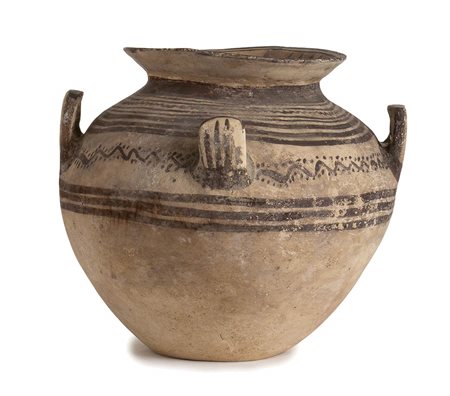
Lotto 53 DAUNIAN OLLA
Apulia, Subgeometric Period III, ca. 400 - 300 BC
height cm 26,5; diam. cm 19
Provenance: Private collection, London; acquired in Brussels from Alara Gallery on 1994; formerly in an old German collection (Düsseldorf). -
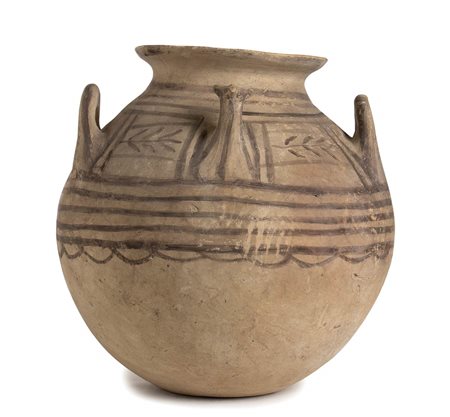
Lotto 54 DAUNIAN OLLA
Apulia, Subgeometric Period IIIb, ca. 350 - 300 BC
height cm 29,5; diam. cm 16,5
Characterized by two zoomorphic protome between handles. Provenance: Private collection, London; acquired in Brussels from Alara Gallery on 1994; formerly in an old German collection (Düsseldorf). -
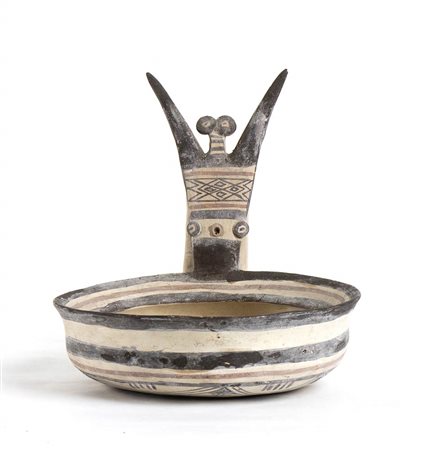
Lotto 55 DAUNIAN KYATHOS
Apulia, Subgeometric Period II, ca. 550 - 400 BC
height cm 13,5; diam. cm 13,5
Provenance: English private collection, according to the heirs possibly purchased in some auction or Art Gallery during 1970s-1980s. -
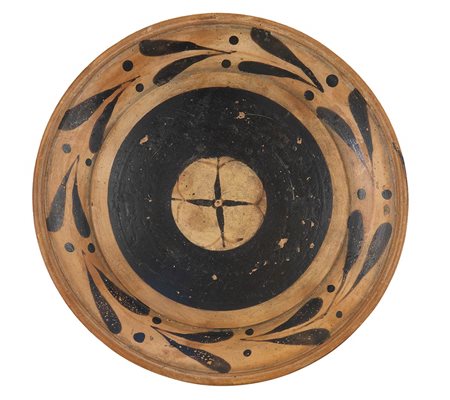
Lotto 56 GREEK HELLENISTIC FLORAL PEDESTAL DISH
4th century BC
height cm 7; diam. cm 17
Intact. Provenance: English private collection, according to the heirs possibly purchased in some auction or Art Gallery during 1970s-1980s. -
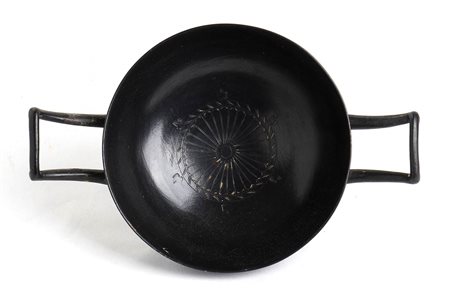
Lotto 57 GREEK HELLENISTIC BLACK-GLAZED STEMLESS KYLIX
South Italy, 4th century BC
height cm 5,5; diam. cm 12
With a stamed decoration on the inner surface, characterized by radiant petals and leaves. Provenance: English private collection, according to the heirs possibly purchased in some auction or Art Gallery during 1970s-1980s. -
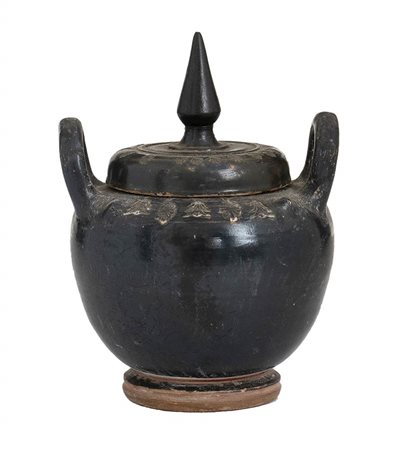
Lotto 58 GREEK HELLENISTIC BLACK-GLAZED LEBES WITH LID
South Italy, 4th century BC
height (with lid) cm 11; diam. cm 4,5
Provenance: English private collection, according to the heirs possibly purchased in some auction or Art Gallery during 1970s-1980s. -
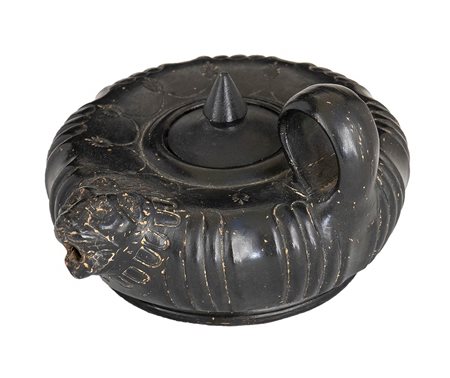
Lotto 59 GREEK HELLENISTIC BLACK-GLAZED GUTTUS
South Italy, 4th century BC
height cm 6,3; diam. cm 11
With Greek letters in the inner rim. Intact. Provenance: Private collection, London; acquired in Brussels from Alara Gallery on 1994; formerly in an old German collection (Düsseldorf). -
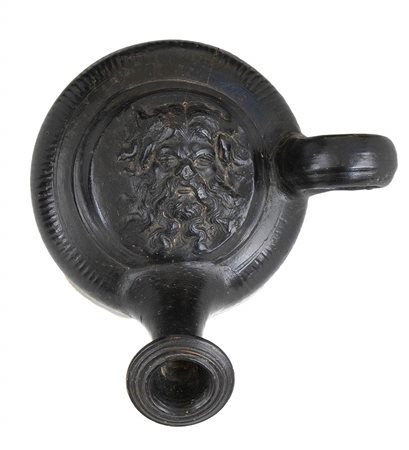
Lotto 60 GREEK HELLENISTIC BLACK-GLAZED GUTTUS WITH SILENUS
South Italy, 4th century BC
height cm 12
Intact, with minor cooking cracks. Provenance: Private collection, London; acquired in Brussels from Alara Gallery on 1994; formerly in an old German collection (Düsseldorf). -
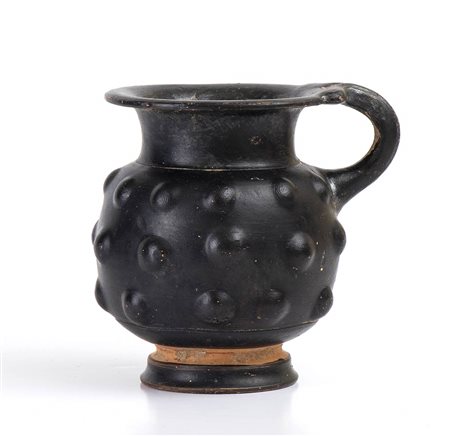
Lotto 61 GREEK HELLENISTIC BLACK-GLAZED PINE CONE MOULDED JUG
South Italy, 4th century BC
height cm 8,5, diam. cm 6,5
Intact. Provenance: Property of a gentleman; acquired on the European art market between 1980s and 1990s -
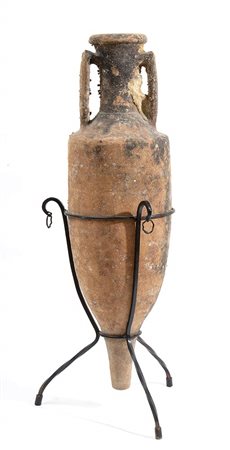
Lotto 62 ROMAN “DRESSEL 2-4” TYPE AMPHORA
1st century BC - 1st century AD
height (amphora) cm 102; height (with stand) cm 107; diam. cm 12,5
Its production was located in central Tyrrhenian area and in Spain and documents the growth of the wine trade within the Roman Provinces. Intact; on the shoulder a small circular stamp with the letter D. The encrustations visible on the vessel’s surface are caused by centuries of wear in the marine environment. Provenance: From a collector-entrepreneur of the past who lived between the US and Europe, bought in the 1980s. -
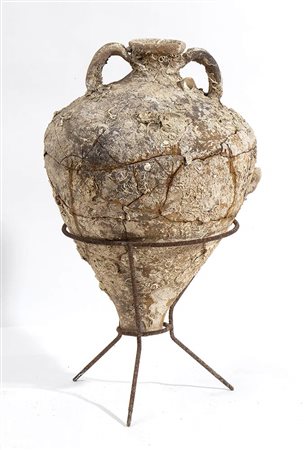
Lotto 63 ROMAN “GAULOISE” TYPE AMPHORA
2nd - 3rd century AD
height (amphora) cm 59; height (with stand) cm 73; diam. cm 11
Restored by fragments, with few missing pieces. The encrustations visible on the vessel’s surface are caused by centuries of wear in the marine environment. Provenance: From a collector-entrepreneur of the past who lived between the US and Europe, bought in the 1980s. -
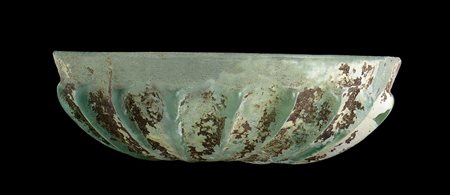
Lotto 64 ROMAN GLASS RIBBED BOWL
1st -3rd century AD
height cm 4,5; diam. cm 15,3
Beautiful ribbed bowl of a trasparent bluish-green glass, with sporadic iridescence. Intact. Provenance: English private collection, purchased from Pierre J. Farrah in Beyrouth on 28 December 1960 and accompanied by an old photograph showing it. -
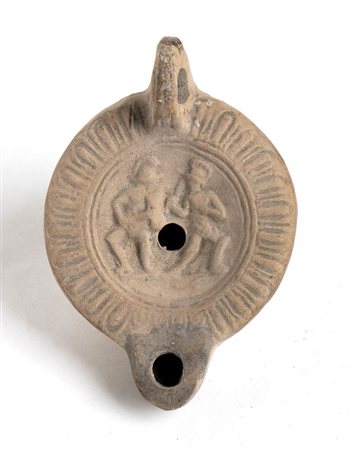
Lotto 65 ROMAN OIL LAMP WITH GLADIATORS
1st - 2nd century AD
length cm 9,5
Provenance: English private collection, according to the heirs possibly purchased in some auction or Art Gallery during 1970s-1980s. -
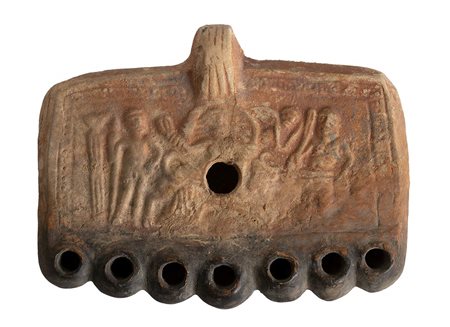
Lotto 66 ROMAN MULTINOZZLED OIL LAMP
2nd - 3rd century AD
height cm 10,5; length cm 14,5
Characterized by multiples nozzles. A moulded decoration is arranged on the surface; the depiction is complex and probably it is the representation of Europa’s myth. Intact. Provenance: English private collection, according to the heirs possibly purchased in some auction or Art Gallery during 1970s-1980s. -
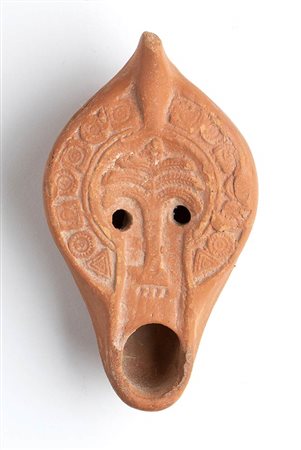
Lotto 67 AFRICAN RED SLIP OIL LAMP WITH PALM TREE
4th - 6th century AD
height cm 4,5; length cm 11,3
Intact and with the manufactures name on rear. Provenance: From the collection of a Diplomatic family since 1980s. -
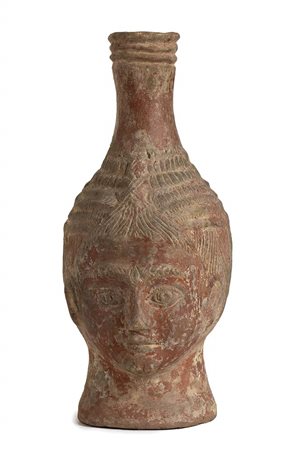
Lotto 68 AFRICAN RED SLIP FLASK
Workshop of Navigius, 270 - 320 AD
height cm 25,5; diam. cm 5,5
Roman mould-made flask, in a shape of a young man head. Great attention to the details, as visible from the hairs and eyebrown. Some scattered cracks and abrasions. Provenance: From the collection of a Diplomatic family since 1980s. -
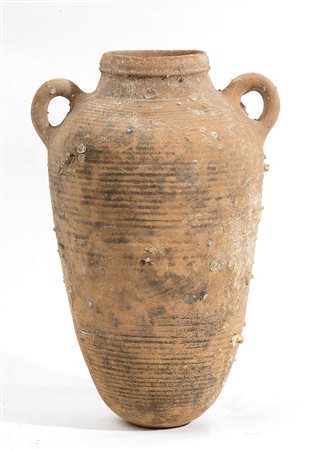
Lotto 69 BYZANTINE AMPHORA
5th - 7th century AD
height cm 57; diam. cm 14
Characterized by loop handles and by a bullet-like shape, with deeply incised ridges around the all body. This type is widespread in the Eastern Mediterranean and in the Black Sea. The encrustations visible on the vessel’s surface are caused by centuries of wear in the marine environment. Provenance: From a collector-entrepreneur of the past who lived between the US and Europe, bought in the 1980s. -
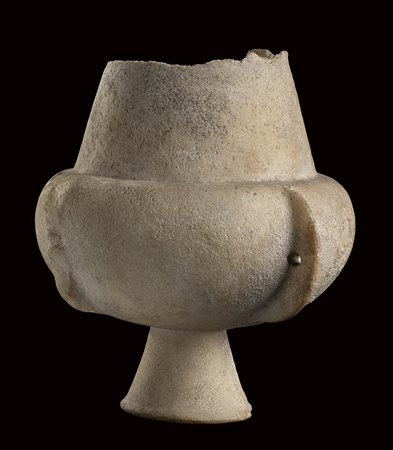
Lotto 70 CYCLADIC MARBLE KANDILA
Early Cyladic I, ca. 3200 - 2700 BC
height cm 20; diam. cm 10
The kandila is characterized by: the trunconical neck fitted with a small rounded lip; the bulbous body with a narrow and flat shoulder; the triangular shaped foot; four small vertical handles with holes, which served to suspend and/or transport the container with a cord. Repaired. Provenance: English private collection, with a declaration of Elie Borowski, Basel 30th November 1972.
-
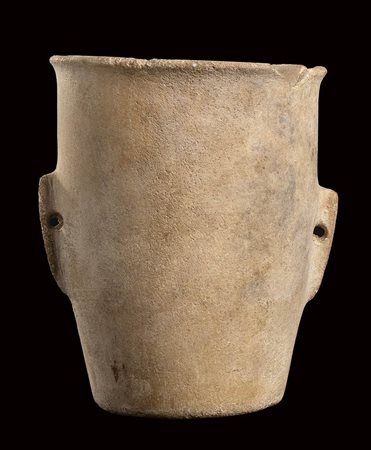
Lotto 71 CYCLADIC MARBLE BEAKER
Early Cyladic I, ca. 3200 - 2700 BC
height cm 16; diam. cm 12
It was designed for suspension and intended as a liquid container. The beaker is one of the most elegant vessel forms developed by Cycladic manufacturing. The vessel is intact, with only some abrasions. Provenance: English private collection, with a declaration of Elie Borowski, Basel 30th November 1972. -
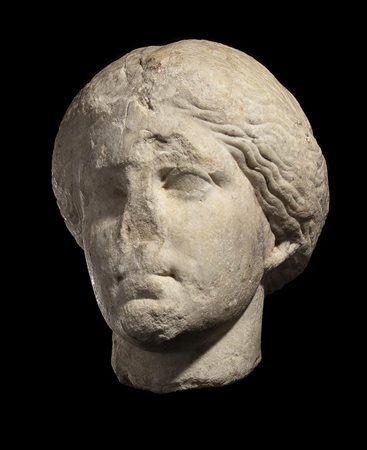
Lotto 73 GREEK ATTIC MARBLE HEAD OF A WOMAN
4th century BC
height (head) cm 31; height (stand) cm 12; length cm 17 x 17
Larger than life-size Attic marble female head, perhaps of a goddess. The oval is elongated, with full cheeks and round chin. Eyes and eyelids are delicately molded, creating the effect of a deep gaze and a feeble smile. The forehead is framed by fine and soft locks tied back, that allow us to glimpse the ears. The face is partially damaged by ancient injuries: an ancient restoration made on back and top of the head is still visible through the traces of the Gradina (or tooth chisel) and the oxide of an iron pin. Published in the catalogue: Oliver Forge, Brendan Lynch: The Ancient World. From Mesopotamia to Coptic Egypt, London 30 June - 7 July 2017, n. 37. Provenance: English private collection; bought from Godson & Coles, London, 2002; acquired from a regional auction where it had been consigned for sale from a deceasede's estate, it is said owned by an English noble family who preferred to remain anonymous, descendant of a contemporary Lord Elgin's archaeologist. -
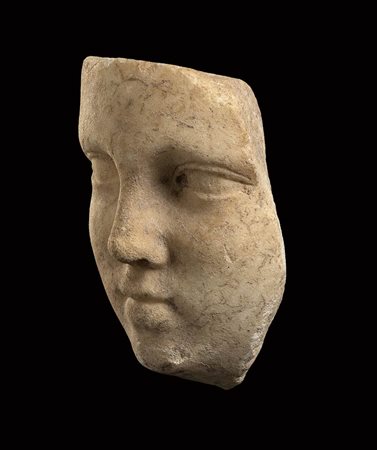
Lotto 74 GREEK HELLENISTIC MARBLE PORTRAIT OF A GODDESS
2nd - 1st century BC
height cm 10 (cm 19 with Iron support)
Even if it is preserved only a portion, as a mask, this head preserves its beauty and it's possible appreciate its high artistic quality. This small head has a naturalistic visage, with rounded forehead, large lidded almond-shaped eyes and fine brow-line that arches gracefully and merges with the bridge of her nose. Provided with an iron museal stand. Provenance: From the collection of Mr. U.C., started during 1950s in Brussels; then, collection supplemented by Diplomatic sons until the late 1990s. -
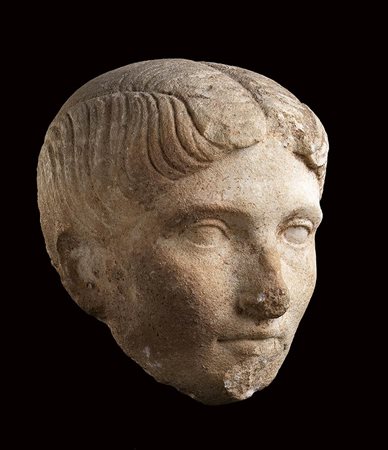
Lotto 75 ROMAN MARBLE PORTRAIT OF A WOMAN
Julio-Claudian Period, 1st century BC - 1st century AD
height cm 25
The Roman lady is represented with the oval face characterized by rounded chin and slightly-full lips. The eyes are framed by thin modelled brows, arching gracefully and merging with the bridge of her nose. On the short forehead, the wavy hairs are center parted, with the individual strands delineated, which are elegantly pulled back to the nape, in origin probably collected in a chignon. The head is rendered with great restraint and an admirable mixture of realistic and idealized forms, recalling the expressions of beauty in vogue during the late Augustan time and the first decades of Julio-Claudian period. Provenance: Ex Sotheby’s, London 10-11 December 1992, lot 490. -
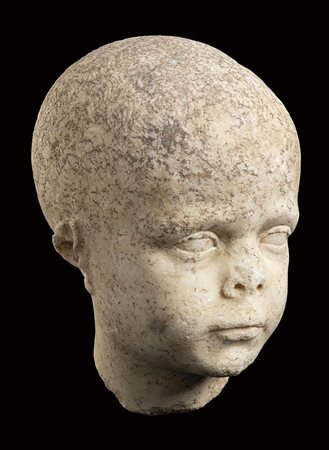
Lotto 76 ROMAN MARBLE PORTRAIT OF A CHILD
1st century BC - 1st century AD
height cm 21 (cm 26 with Iron support)
Beautiful portrait of a child caught in the transition to his second childhood. The portrait is characterized by a particular rendering of the physiognomy; the executive details are reminiscent of the early childhood portrait of the Julio-Claudian period. Provided with an iron museal stand. Provenance: From the collection of Mr. U.C., started during 1950s in Brussels; then, collection supplemented by Diplomatic sons until the late 1990s. -
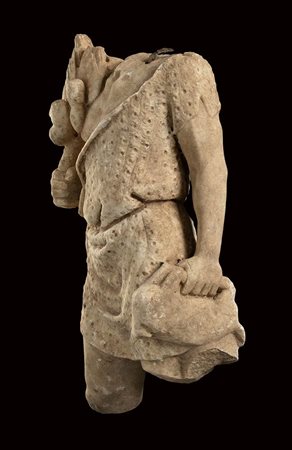
Lotto 77 ROMAN MARBLE HUNTER
1st - 3rd century AD
atic sons until the late 1990s.
height cm 46,5 (cm 48,5 with Iron support)
Portrayal of a young man, an hunter, as suggested by the game he carries with him. The emaciated body is covered by a robe of animal skin. The strong aesthetic realism that pervades this statue recalls the naturalism of bronze production in Roman times. A close comparison, a twin and specular statue of the same workshop, is preserved in the Barnes Foundation, Philadelphia, Pennsylvania (A231); so, this specimen could be part of a statuary group representing some Divine Twins. Provided with an iron museal stand. Provenance: From the collection of Mr. U.C., started during 1950s in Brussels; then, collection supplemented by Diplom -
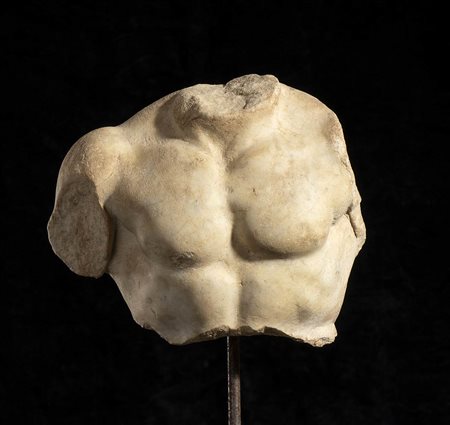
Lotto 78 ROMAN MARBLE TORSO OF HERCULES
1st - 2nd century AD
height (bust) cm 14; total with stand cm 14; length max cm 15
Despite the small size of the torso, the execution of the anatomical features is made with great skill. One immediately recognizes the representation of Hercules knowed as "Farnese" or "Weaky" iconographic type. It represents a mature Hercules, muscular, but tired. The torso is slightly tilted forward, suggesting the presence of the club that, as also in the most known representations, acts as his support. Provided with a Peperino Grigio stone long stand. Provenance: From a collector-entrepreneur of the past who lived between the US and Europe, bought in the 1980s. -
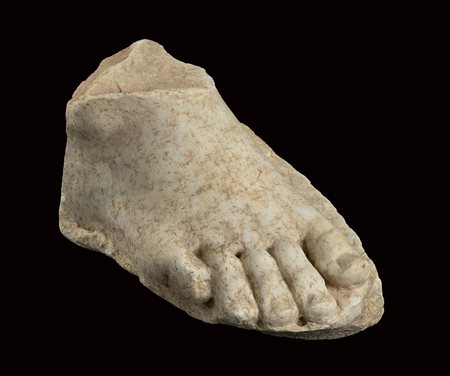
Lotto 79 ROMAN MARBLE FOOT
1st century BC - 1st century AD
height cm 9; length cm 18
Set on a platform base, this right foot is naturalistically carved, as visible from the details of its toes and nails. Provenance: From the collection of Mr. U.C., started during 1950s in Brussels; then, collection supplemented by Diplomatic sons until the late 1990s. -
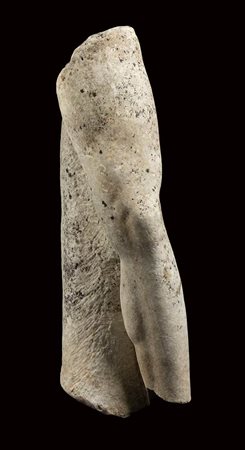
Lotto 80 ROMAN MARBLE LEG
1st - 3rd century AD
height cm 75; length cm 31
Life size standing marble leg laying on support, probably a tree-trunk. It is realized with a particular attention to the anatomy, emphatized by the slow light slipping. Provenance: English private collection, Kent. -
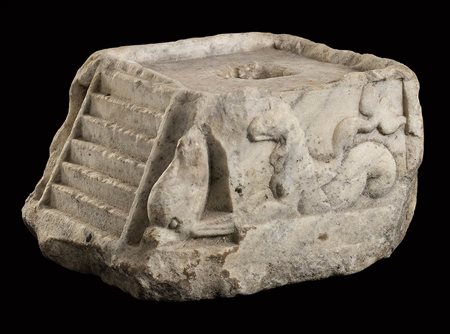
Lotto 81 ROMAN MARBLE MODEL OF A TEMPLE PODIUM
1st - 2nd century AD
height cm 15; length cm 21,5
Originally a stand belonging to a cult image perhaps linked to the sea, this miniature temple podium has a frontal staircase (perron), dolphins and sea monsters on sides. Provenance: From the collection of Mr. U.C., started during 1950s in Brussels; then, collection supplemented by Diplomatic sons until the late 1990s. -
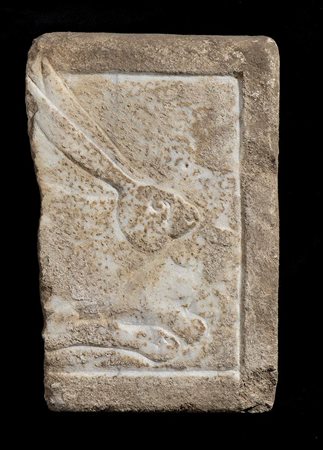
Lotto 82 ROMAN MARBLE OSCILLUM FRAGMENT
ca. 1st century AD
height cm 16,5, length cm 11, wide cm 2,5
Usually placed in the Roman villa, decorated reliefs with a forepart of an hare moving to the right on one side, the other side with the rear of a swimming dolphin. Provenance: Ex ACR Auctions, E-Auction 29, Munich 21 September 2015, lot 390. -
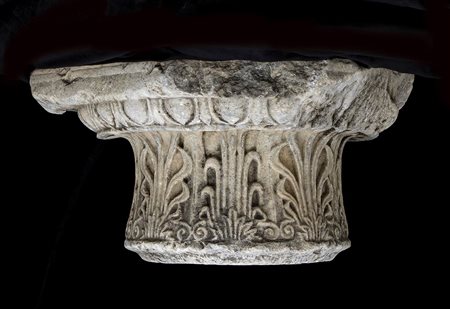
Lotto 83 ROMAN MARBLE TUSCANIC CAPITAL
Julio-Claudian Period, 1st century BC - 1st century AD
height cm 39, diam. base 46, length cm 65 x 65
Of particular beauty and compositional complexity, this capital in Proconnesian marble presents elements dear to the stone tradition of the Augustan period - such as ionic kyma with thin shells adhering to the ovule and open and closed palmettes, alternating with water leaves - which are here, however, interpreted in a new and detailed key that suggests a reworking of the structure for a second use. Provenance: From a collector-entrepreneur of the past who lived between the US and Europe, bought in the 1980s. -
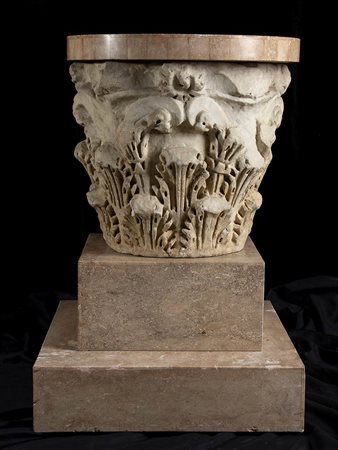
Lotto 84 ROMAN MARBLE CORINTHIAN CAPITAL ADAPTED TO TABLE
Flavian Period, 1st century AD
height (capital) cm 40; height tot. cm 75; diam. cm 48; round glass top diam. cm 130
A very nice modern table, composed of a wooden covered with marble stepped base, equipped with wheels, and an upper wooden covered with marble disc that acts as a support for the glass top. As leg, a portion of a Roman Marble Capital. Provenance: English old private collection since 1980s, London. -
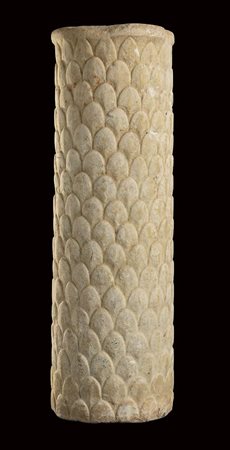
Lotto 85 ROMAN MARBLE COLUMN WITH LEAVES
1st - 2nd century AD
height cm 55
Provenance: English private collection, Kent. -
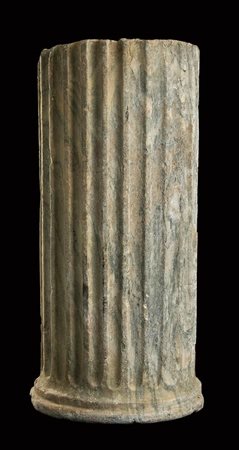
Lotto 86 ROMAN FLUTED COLUMN IN CIPOLLINO MARBLE
1st - 2nd century AD
height cm 47
Provenance: English private collection, Kent. -
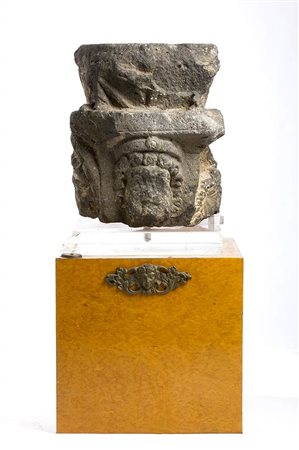
Lotto 87 ROMAN BASALT ALTAR WITH HELIOPOLITAN DEITIS
2th – 3rd century AD
height cm 40
On each side a portrayal of deity: Apollo Helios, nimbate and radiate; a female head that reminds the Syrian goddess Aphrodite - Astarte; a diademed bearded man with short wavy hair, probably resembling to Zeus Helios; finally Tyche, with turret crown. The whole enriched by repetition of symmetrical couple of stylized phytomorphic elements. A sacre altar of the Roman Province of Syria, an extremely rare specimen, maybe the only one in private hand, beautiful example of the Roman-Oriental Religious syncretism. Provenance: Property of an Italian Noble family since 1980s; with an expert report dated 2005; sold with an export licence issued by the Republic of Italy. -
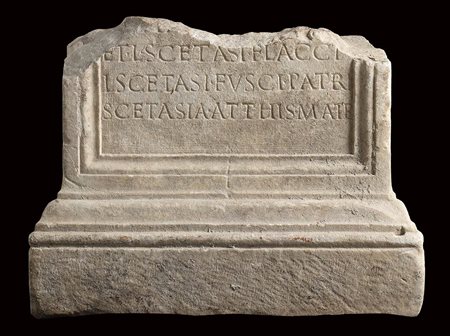
Lotto 88 ROMAN MARBLE ALTAR OF THE GENS SCETASIA
1st - 2nd century AD
height cm 36; length cm 46; wide cm 29
Provenance: From the collection of Mr. U.C., started during 1950s in Brussels; then, collection supplemented by Diplomatic sons until the late 1990s. -
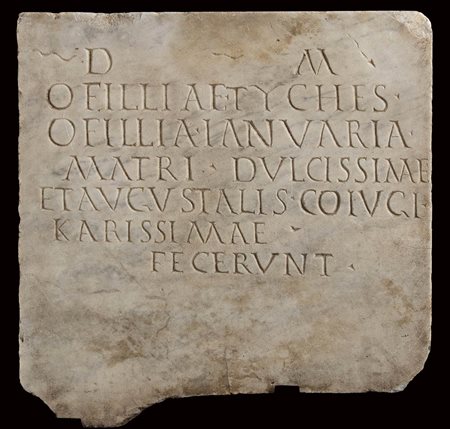
Lotto 89 ROMAN MARBLE GRAVESTONE OF OFILLIA TYCHE
2nd - 3rd century AD
height cm 46 (cm 48,5 with Iron support); length cm 46,5; wide cm 2,5-6
Provided with an iron museal stand. Provenance: From the collection of Mr. U.C., started during 1950s in Brussels; then, collection supplemented by Diplomatic sons until the late 1990s. -
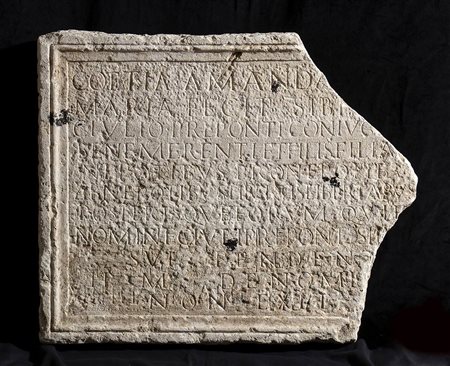
Lotto 90 ROMAN LIMESTONE GRAVESTONE OF COTTIA AMANDA
1st - 2nd century AD
height cm 52,5; length cm 63,5; wide max cm 10
Provenance: From the collection of Mr. U.C., started during 1950s in Brussels; then, collection supplemented by Diplomatic sons until the late 1990s. -
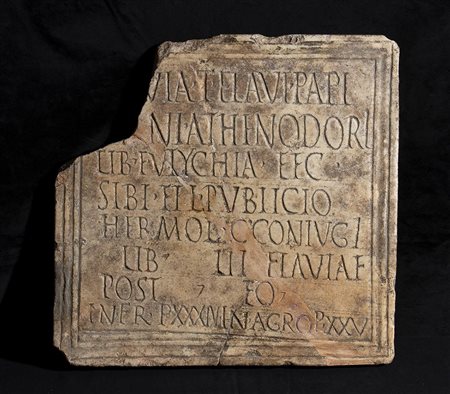
Lotto 91 ROMAN MARBLE GRAVESTONE
3rd - 4th century AD
height cm 37; length cm 38; wide cm 3,5
Made reusing a marble threshold; antique patina and old plaster restorations. Provenance: English private collection, acquired by the current owner in Munich in 1990s. -
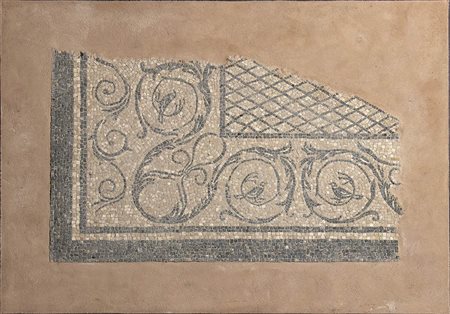
Lotto 92 ROMAN MOSAIC FLOOR
2nd - 3rd century AD
height cm 78; length cm 103; wide cm 3,3
Beautiful fragment of Roman mosaic floor corner in a modern frame. The decoration consists of black and white tesserae, composing a vegetal scrolls, in which birds are arranged on. Provenance: From the collection of Mr. U.C., started during 1950s in Brussels; then, collection supplemented by Diplomatic sons until the late 1990s. -
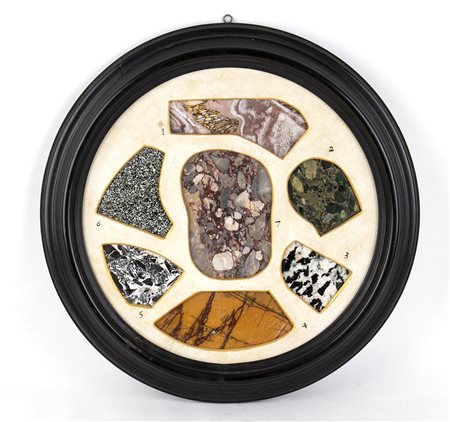
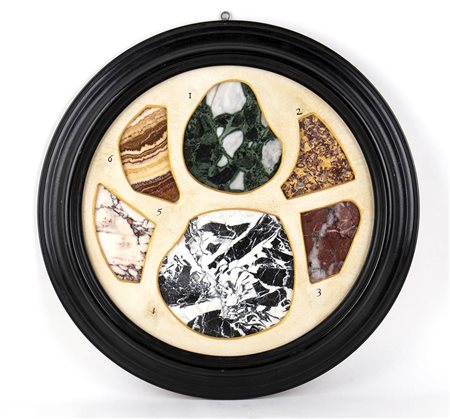
Lotto 93 LITHOTHÈQUE
21th century
diam. cm 45
Collection of ancient and rare marbles, polished in modern times and arranged in a black frame as precious furnishing; this lithothèque, also called marmothèque, contains several samples of ancient Roman and Greek marbles described by Professor Raniero Gnoli with references taken from his book "Marmora Romana", published in three edition (1971, 1988, 2018). 1) Breccia di Sciro con elementi alabastrini MR pp. 232 sgg. 2) Breccia verde egiziana MR pp. 117-121 3) Granito bianco e nero della Colonna MR pp. 152 4) Giallo antico MR pp. 166-168 5) Bianco e nero antico MR pp. 196-198 6) Granito della sedia minuto MR pp. 153-158. 7) Breccia di Sciro MR p. 232 e sgg. -
Lotto 94 LITHOTHÈQUE
21th century
diam. cm 45
Collection of ancient and rare marbles, polished in modern times and arranged in a black frame as precious furnishing; this lithothèque, also called marmothèque, contains several samples of ancient Roman and Greek marbles described by Professor Raniero Gnoli with references taken from his book "Marmora Romana", published in three edition (1971, 1988, 2018). 1) Verde antico MR pp. 87-90; 162-165 2) Broccarello di Spagna MR pp. 210-211 3) Portasanta MR pp. 172 e sgg. 4) Bianco e nero antico MR pp. 196-198 5) Pavonazzetto MR pp. 169 e sgg. 6) Alabastro di Palombara MR pp. 225-227. -
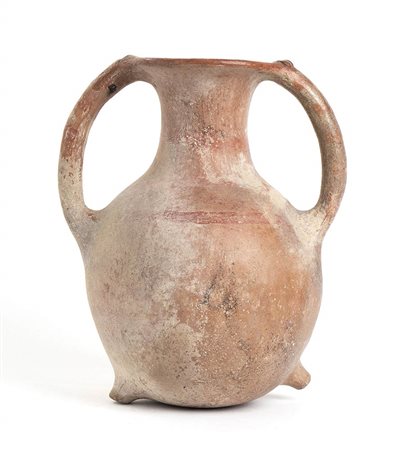
Lotto 95 CYPRIOT AMPHORA WITH NIPPLES BASE
Early Bronze Age, ca. 2400 - 1900 BC
height cm 26; diam. cm 11
Intact. Provenance: English private collection, according to the heirs possibly purchased in some auction or Art Gallery during 1970s-1980s. -
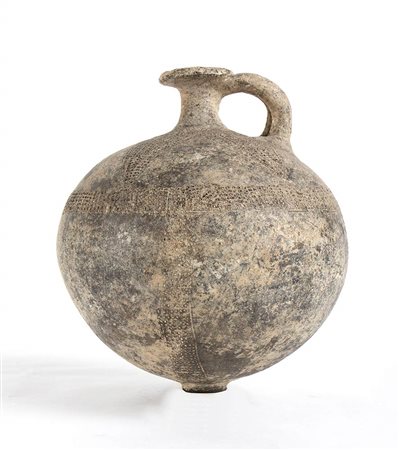
Lotto 96 NEAR EASTER EARTHENWARE JUGLET
Tell el-Yahudiyeh, 1600 – 1050 BC
height cm 16
Characteized by a tapered globular body, with short cylindrical neck single applied double-handle. The decoration consistes of incised geometric decoration comprising bands of punctured dots. It is a distinctive ceramic ware of the late Middle Bronze Age / Second Intermediate Period. The ware takes its name from its type site at Tell el-Yahudiyeh in the eastern Nile Delta of ancient Egypt, and is also found in a large number of Levantine and Cypriot sites. Provenance: English private collection, purchased in Tehran from Monouchehr Soleiman Aaron in the 1970s, accompanied by a Polaroid with the word "from Amlash (north of Iran)". -
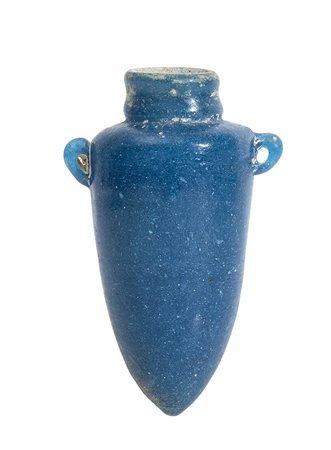
Lotto 97 EGYPTIAN TURQUOISE GLASS PASTE TORPEDO FLASK
New Kingdom, ca. 1300 BC
height cm 7; diam. cm 2
Small tapered body, with a pointed end; on shoulder, two ovoide horizontal handles. Provenance: French private collection acquired at Galerie Art Olympia on 25 June 1985; ex collection of Revelli Countess.