
ASTA 217 - FINE CHINESE, ISLAMIC & ASIAN ART
-
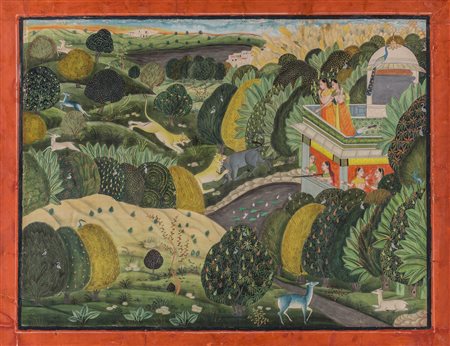
Lotto 498 Arte Indiana Grande miniatura indiana con scena di caccia alla tigre Rajasthan, Kotah, XIX secolo . -. Cm 56,00 x 44,00. Scena di caccia tipica dello stile di Kotah nel soggetto, come nella resa pittorica. Sorprendentemente ad essere impegnate nella battuta di caccia sono delle donne radunate nell'edificio a destra della rappresentazione.
Indian Art Indian miniature with tiger hunting scene Rajasthan, Kotah, 19th century Natural pigments and gold on paper . . Cm 56,00 x 44,00. -
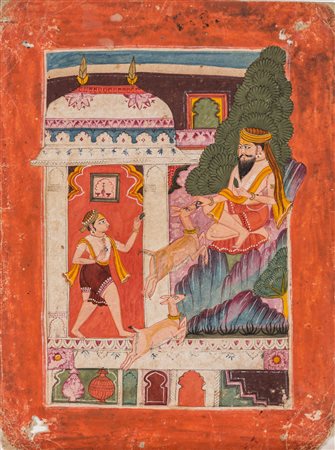
Lotto 499 An important miniature from a Ragamala India, South-West Rajasthan, Sirohi, 1680 ca. . Cm 17,00 x 22,70. The Ragamala is a series of paintings depicting musical modes, and representing one of the themes most dear to the Indian tradition, especially the Rajasthani one. Each series comprises 36 or, more rarely 42, paintings, grouped in families of six members which include a raga (male) and five raginis (wives). Considering the complexity of this structure, a complete series is very hard to find, but harder still is finding Ragamala belonging to the Sirohi school, of which are known at the moment only a complete series of 36 paintings and another of 13, part of the K. Sangram Singh collection in Nawalgarh, in addition to various single paintings part of public and private collections, and a series of thirteen paintings which recently gained the attention of academics, and from which come the two articles on offer (present lot and the next). The Sirohi painting school was active for around two centuries, XVII - XVIII, but the period in which most Ragamala paintings were made was the end of the XVII century, to which belong all of the pieces known. It is widely agreed that the distinctive characteristics of this school lie in the brilliance of the colors and, especially as far as Ragamala are concerned, in the interpretation of the themes and classical Rajasthani iconography with a local accent, traits which make the Sirohi school unique among the Rajputi painting schools. This painting depicts Sarang Raga, as written in the text on the verso of the folio, where an ascetic seats on a rock next to a tree while two deers are running towards him and a young disciple is approaching. They both carry leaves to feed the animals. All natural elements are set in a courtly location. For reference please see Victoria and Albert Museum, London (IS. 113-1960) and for further information refer to the article Elena Preda, The Sirohi Ragamalas: an important Discovery, in Rivista degli Studi Orientali, 2011, volume LXXXIV, pp. 371-383.
-
Lotto 500
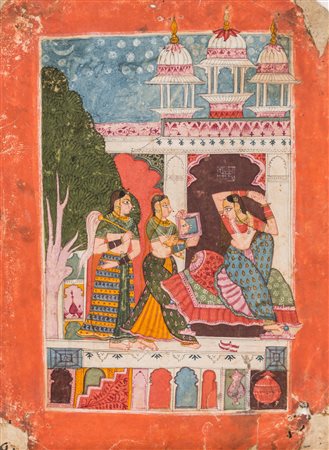
Indian Art Desvarari Ragini An important miniature from a Ragamala India, South-West Rajasthan, Sirohi, 17th century . . Cm 16,50 x 22,50. The Ragamala is a series of paintings depicting musical modes, and representing one of the themes most dear to the Indian tradition, especially the Rajasthani one. Each series comprises 36 or, more rarely 42, paintings, grouped in families of six members which include a raga (male) and five raginis (wives). Considering the complexity of this structure, a complete series is very hard to find, but harder still is finding Ragamala belonging to the Sirohi school, of which are known at the moment only a complete series of 36 paintings and another of 13, part of the K. Sangram Singh collection in Nawalgarh, in addition to various single paintings part of public and private collections, and a series of thirteen paintings which recently gained the attention of academics, and from which come the two articles on offer (present lot and the next). The Sirohi painting school was active for around two centuries, XVII - XVIII, but the period in which most Ragamala paintings were made was the end of the XVII century, to which belong all of the pieces known. It is widely agreed that the distinctive characteristics of this school lie in the brilliance of the colors and, especially as far as Ragamala are concerned, in the interpretation of the themes and classical Rajasthani iconography with a local accent, traits which make the Sirohi school unique among the Rajputi painting schools. This painting depicts Desvarari, or a twisting lady who raises her arms while mirroring in a mirror carried by a maid (this being a local addition to the Rajasthani tradition). For further information refer to the article Elena Preda, The Sirohi Ragamalas: an important Discovery, in Rivista degli Studi Orientali, 2011, volume LXXXIV, pp. 371-383. -
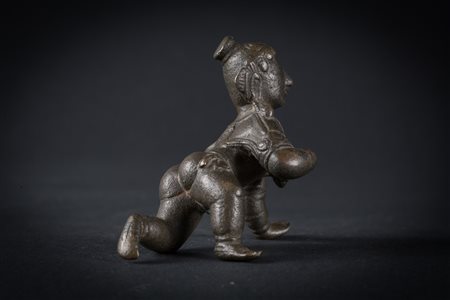
Lotto 503 Arte Indiana Balakrishna India Meridionale, tardo periodo Chola, XIII secolo . -. Cm 7,00 x 9,00. Piccolo bronzo raffigurante Krishna bambino a carponi. La mano sinistra porge una palla di burro qui assente.
Indian Art A bronze figure of Balakrishna Southern India, late Chola period, 13th century . . Cm 7,00 x 9,00. -
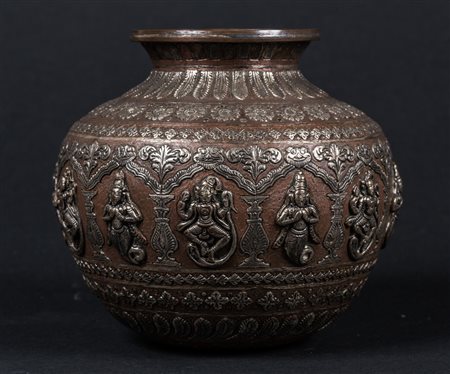
Lotto 504 Arte Indiana Vaso in rame con decorazione in argento India meridionale, Thanjavur, tardo XIX secolo . -. Cm 14,00 x 13,50. Decorato con rilievi vegetali e fascia centrale raffigurante due degli avatar di Vishnu. Una figura mancante.
Indian Art A copper vase with silver applied decoration Southern India, Thanjavur, late 19th century. . Cm 14,00 x 13,50. -
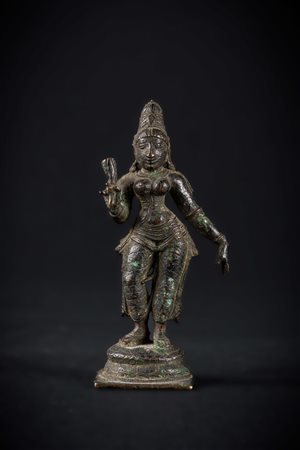
Lotto 505 Arte Indiana Piccola scultura in bronzo raffigurante Bhumidevi India Meridionale, periodo Chola, XII secolo . -. Cm 3,00 x 8,00. Piccola fusione ritraente la consorte di Vishnu stante su una base a fiore di loto singolo, caratterizzata da abbigliamento finemente realizzato, nella mano sinistra regge un bocciolo di loto.
Indian Art A small bronze sculpture of Bhumidevi Southern India, Chola period, 12th century . . Cm 3,00 x 8,00. -
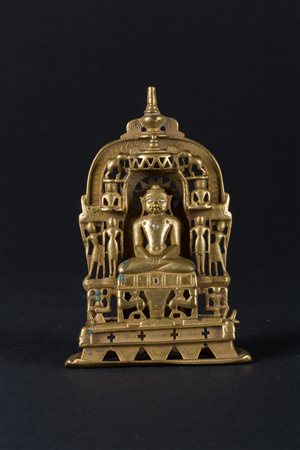
Lotto 506 Arte Indiana Altare giainista in bronzo India, XVI secolo . -. Cm 8,50 x 13,00. Fusione raffigurante uno dei 24 tirthamkara seduto in padmasana su un piedistallo e con le mani giunte nella posizione dhyanamudra. L'opera presenta intarsi in rame e argento. intorno a lui, in un gioco di traforo, sono raffigurati otto personaggi secondari e quattro animali.
Indian Art A bronze jain altar India, 16th century . . Cm 8,50 x 13,00. -
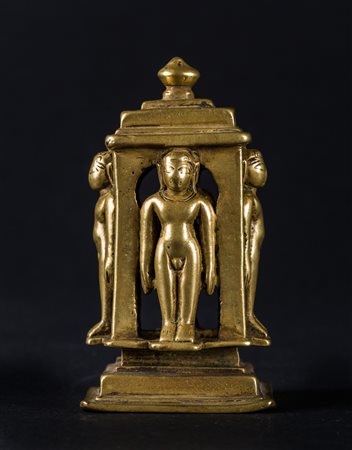
Lotto 507 Arte Indiana Tempio jainista in bronzo
India settentrionale, XVI - XVII secolo . -. Cm 6,00 x 11,00. Piccolo santuario in bronzo a base quadrata raffigurante, su ciascuno dei lati, uno dei ventiquattro tirtankara in postura stante.
Indian Art A Jain bronze temple
Northern India, 16th - 17th century . . Cm 6,00 x 11,00. -
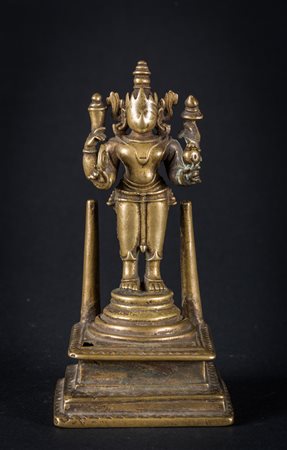
Lotto 508 Arte Indiana Fusione in bronzo raffigurante Vishnu India, Orissa, XVIII secolo . -. Cm 8,00 x 17,00. Poggiato su base quadrata in posizione stante, la divinità è raffigurata con quattro braccia, nelle cui mani stringe altrettanti attributi: la mazza, la conchiglia, il disco e un fiore di loto. Il viso è fortemente smussato ma è arricchito da un'elaborata corona.
Indian Art A cast bronze figure of Lord Vishnu India, Orissa, 18th century . . Cm 8,00 x 17,00. -
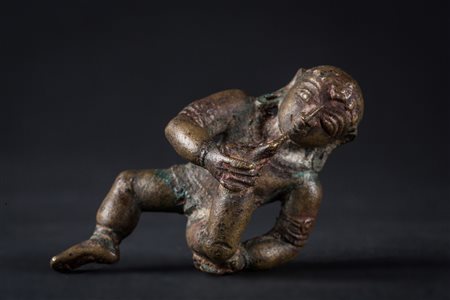
Lotto 509 Arte Indiana Balakrishna India meridionale, periodo Chola, XII secolo . -. Cm 4,50 x 9,00. Fusione in bronzo raffigurante Krishna bambino che, in una rara rappresentazione, si porta il piede sinistro alla bocca.
Indian Art A bronze Balakrishna figure Southern India, Chola period, 12th century . . Cm 4,50 x 9,00. -
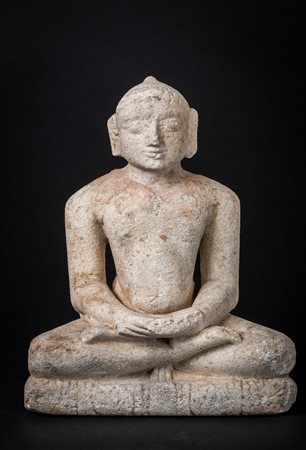
Lotto 510 Arte Indiana Scultura Jain in marmo raffigurante uno dei tirthankara India, Gujarat, XVI - XVII secolo. -. Cm 20,00 x 27,00. Raffigurante uno dei ventiquattro profeti della religione jainista, seduto in padmasana su una base scolpita, il busto eretto, le mani giunte in grembo nel gesto di meditazione dhyanamudra. Sul retro della base è possibile notare un'iscrizione.
Indian Art A white marble Jain sculpture of a Tirthankara India, Gujarat, 16th - 17th century. . Cm 20,00 x 27,00. -
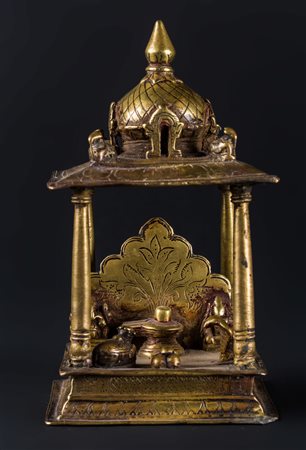
Lotto 511 Arte Indiana Tempio shivaita in bronzo India, XVII - XVIII secolo . -. Cm 10,00 x 19,00 x 10,00. Tempio shivaita composto da una base e quattro colonne sormontate da un tetto in stile indo-persiano. Al suo interno sono raccolti i principali simboli del culto: Yoni e Lingam, il bufalo sacro Nandi, la divintà elefantina Ganesh ed offerte votive.
Indian Art A shivaite bronze temple India, 17th - 18th century . . Cm 10,00 x 19,00 x 10,00.